Published
-
France Geopolitical Profile 2026
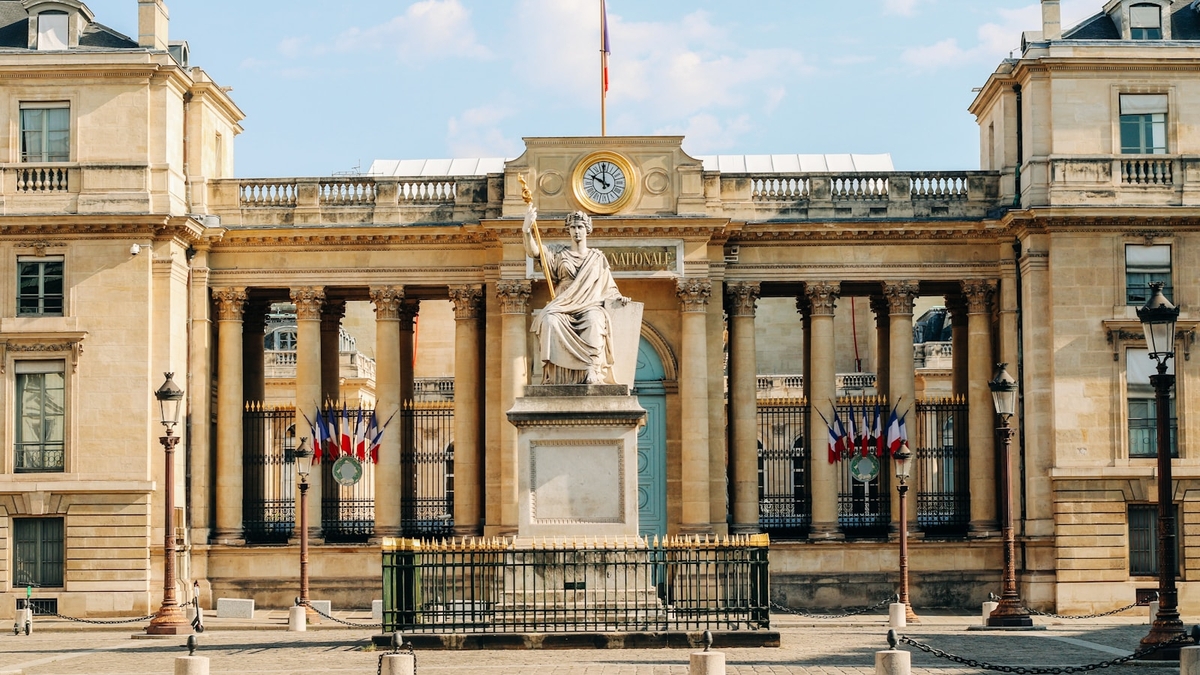
Photo by Eddie Junior on Unsplash
France Geopolitical Profile 2026
1. Executive Summary
France combines nuclear weapons, a permanent UN Security Council seat, institutional weight inside the EU, and an Indo-Pacific foothold through overseas territories. Source: France Diplomatie, Indo-Pacific strategy and Élysée, Ukraine security guarantees support this framing.
Yet French politics in 2026 combines a strong presidency with a weak parliamentary majority. Under President Emmanuel Macron, Prime Minister Sébastien Lecornu runs the government, while the National Assembly is split among the National Rally, presidential groups, the left, Socialists, and conservative right. Source: info.gouv.fr, Composition du Gouvernement lists Lecornu as prime minister, and Assemblée nationale, Effectif des groupes politiques shows a fragmented chamber, including National Rally 122, Ensemble 91, LFI-NFP 71, and Socialist-linked groups 68.
       flowchart LR
  A["Presidency"] --> B["EU and security"]
  A --> C["Fiscal policy"]
  D["Fragmented parliament"] --> C
  D --> E["Migration and secularism"]
  B --> F["Ukraine and NATO"]
  B --> G["Africa and Indo-Pacific"]
France should not be read only as a strong state pushing European integration. At home, immigration, secularism, security, purchasing power, agriculture, pensions, and deficits create conflict lines. Abroad, EU strategic autonomy, NATO, Ukraine support, former colonial ties, and overseas territories widen the policy map.
2. Historical and Institutional Frame
Modern French politics rests on the 1789 Revolution, the Fifth Republic, memories of the Algerian War, European integration, nuclear deterrence, and post-colonial ties with Africa. The Fifth Republic gives the president a large voice in foreign and security policy, but budgets, migration, welfare, agriculture, and local administration remain constrained by parliament and social protest.
       timeline
  title French political milestones
  1789 : French Revolution
  1958 : Fifth Republic
  1960s : Decolonization
  1992 : Maastricht Treaty
  2017 : Macron presidency
  2024 : Fragmented assembly after snap election
  2026 : Fiscal constraint under Lecornu government
This system amplifies the president’s voice during crises, while ordinary politics keeps searching for a workable majority. The presidential election indicates national direction; the National Assembly narrows that direction through annual budgets and laws.
3. Power Map
The National Rally is a major opposition force linking immigration, security, purchasing power, and local alienation. The left links living costs, public services, climate, anti-discrimination, and youth frustration. The center and presidential camp emphasize Europe, business, fiscal discipline, and reform, but cannot unite society alone.
| Actor | 2026 reading |
|---|---|
| Élysée | Sets direction on diplomacy, security, and Europe |
| Lecornu government | Connects budget and administration in a divided chamber |
| National Rally | Increases right-wing pressure on migration, security, purchasing power |
| Left and Socialists | Build resistance around welfare, public services, secularism, climate |
| Conservative right and center | Decide issue-by-issue majorities on budgets, security, industry |
In this power map, grand foreign-policy language can outrun domestic implementation. Ukraine support, defense spending, EU industrial policy, and Africa policy can all be affirmed at summits, then pulled back into domestic disputes over money, security, farming, immigration, and purchasing power.
4. Migration, Secularism, and Social Protest
Migration politics often compresses labor needs, refugee protection, security, Islam, republicanism, and local reception capacity into one argument. The OECD reports that first asylum applications in 2024 fell to around 131,000, with Ukraine, Afghanistan, and the Democratic Republic of Congo among the leading origins. Source: OECD, International Migration Outlook 2025: France
Secularism is not simply a principle for removing religion from public space. It is a political language about schools, religious symbols, public service, immigrant integration, anti-discrimination, and freedom of expression. Right, left, and center all invoke republicanism, but they attach different meanings to it.
Social protest is not an exception in French politics; it is part of the system. Protests over farming, pensions, fuel prices, universities, policing, and climate show veto power that cannot be measured only by parliamentary arithmetic. Reading France in 2026 requires putting seat counts and street mobilization on the same political map.
5. EU, NATO, and Ukraine
France speaks about EU strategic autonomy, but it cannot make NATO and the United States irrelevant. On Ukraine, France is trying to connect security guarantees, long-term defense cooperation, and the European defense industry. Source: Élysée, Paris Declaration on robust security guarantees for Ukraine, and Élysée, joint statement of France, the United Kingdom, Germany and Ukraine
Strategic autonomy is not anti-Americanism; it is a way for Europe to widen its diplomatic, defense, and industrial options. France has nuclear deterrence and expeditionary capacity, but ammunition, missile defense, satellites, procurement, and eastern defense all require allies.
6. Africa, Francophonie, and the Indo-Pacific
Relations with former colonies are not a choice between rupture and continuity. Even after military retrenchment in the Sahel and anti-French sentiment, France still tries to preserve influence through language, education, currency links, companies, migration, cultural institutions, and international organizations. In 2026 Africa policy, relations with English-speaking countries such as Kenya matter alongside the francophone sphere. Source: OIF and Le Monde, Africa-France summit in Nairobi
In the Indo-Pacific, France is not an outside observer. Overseas territories such as Réunion, Mayotte, New Caledonia, and French Polynesia give France a basis for sovereignty, maritime security, disaster response, and regional cooperation. Source: France Diplomatie, Indo-Pacific strategy places overseas territories at the center of the strategy.
7. Fiscal Space, Industry, and Nuclear Energy
France combines weak growth, high public debt, strong social spending, and industrial strengths in aerospace, defense, agriculture, luxury goods, and nuclear power. The European Commission projects 0.8% real GDP growth in 2026 and a government deficit of around 5.1% of GDP. Source: European Commission, Economic forecast for France
Fiscal constraint directly affects foreign policy. There is limited room to expand defense spending, Ukraine support, farm aid, industrial subsidies, energy investment, and welfare at the same time. Banque de France projected in June 2026 that the public debt ratio would move toward 122% by the end of 2028. Source: Banque de France, Macroeconomic projections - June 2026
Nuclear power connects French climate policy, industrial policy, and energy security. RTE reports that nuclear generation recovered to 361.7 TWh in 2024, making nuclear power central again in debates over electricity prices, industrial competitiveness, and EU climate policy. Source: RTE, Nuclear power generation in France
8. Japan’s Reading
For Japan, France is an EU rule-maker, an Indo-Pacific territorial power, and a partner shaping European decisions on Ukraine support and defense industry. In the Indo-Pacific strategy, France names Japan as one of its priority partners, and the first industrial rare-earth separation project in New Caledonia also shows Japanese co-investment. Source: France Diplomatie, France’s Indo-Pacific Strategy supports this reading.
At the same time, fragmented domestic politics means that implementation cannot be predicted from leader-level agreements alone.
Three questions matter. First, can France fund defense and industrial policy despite a fragmented parliament? Second, can the center preserve foreign-policy continuity between National Rally and left-wing pressure? Third, can France maintain enough administrative capacity and fiscal space to operate in Africa, the Indo-Pacific, the EU, and NATO at the same time?
France is easiest to read as a country with a strong president and a weak majority. Its international voice is large, but every implementation round brings parliament, protest, fiscal limits, local government, and former colonial ties back into the story.