Published
-
2026-06-28 Middle East deals, AI rules, and consumer prices move together

2026-06-28 Middle East deals, AI rules, and consumer prices move together
The day’s signal came from three linked pressure points: Middle East diplomacy, U.S. war funding, and AI policy. Israel and Lebanon signed a framework agreement, but implementation still depends on Hezbollah’s role. At the same time, Washington’s Iran-war supplement, the Supreme Court’s asylum ruling, and New York’s Democratic socialist upset kept domestic politics hot, while cheaper gas, sticky travel prices, and AI-driven device costs showed how conflict and computing demand are feeding into household budgets.
Politics
Israel and Lebanon sign framework agreement

The Washington-backed framework moves forward, but Hezbollah remains the main obstacle to implementation.
The bottom line: The deal is a step forward, but it can stall if Hezbollah stays outside the plan.
What happened: Israel and Lebanon signed a framework in Washington that opens a path to withdrawals and redeployments in parts of south Lebanon.
Why it matters: Turning a cease-fire into a lasting settlement will hinge on how the deal handles armed groups and security control.
What to watch: Watch the pilot zones, Hezbollah’s response, and the conditions attached to U.S. support.
Trump asks Congress for $87.6B, mostly for Iran war

The White House asked Congress for an $87.6 billion supplement that leans heavily toward war costs.
The bottom line: Congress now has to decide whether to turn Iran war costs into a budget line.
What happened: The administration asked for an $87.6 billion supplement and signaled heavier spending for defense and related costs.
Why it matters: How Congress treats the war bill will deepen the fight over war powers and oversight.
What to watch: Watch for add-ons or conditions from the House and Senate appropriations panels.
Keir Starmer resigns as U.K. prime minister

A bad local-election showing and internal pressure pushed Labour into a leadership reset.
The bottom line: Labour’s slide has turned leadership turnover into the new center of British politics.
What happened: Starmer resigned after poor local-election results and party pressure, opening the way to a new leadership contest.
Why it matters: Britain now has to rebuild its leadership before it can reset policy under weak growth and external pressure.
What to watch: Watch the leading successors and how quickly Labour shifts its election strategy.
Supreme Court backs Trump on stricter asylum rules

The court upheld the administration's tougher policy toward asylum seekers who have not crossed the border.
The bottom line: The ruling gives the administration more room to tighten southern-border enforcement.
What happened: The Supreme Court allowed Trump’s administration to reject asylum claims from people who have not crossed the border.
Why it matters: The legal footing for tougher screening is stronger, so border capacity matters even more.
What to watch: Watch for operational changes, the next round of lawsuits, and how aid groups respond.
Socialist earthquake in NY leaves Democrats reeling

New York primaries boosted left-wing candidates and exposed a sharper fight over the party's direction.
The bottom line: The New York upset has turned Democratic infighting into a question of strategy.
What happened: Several DSA-backed candidates won, while a few high-profile Democrats lost in upsets.
Why it matters: The party now faces a left-versus-center fight that will shape its 2028 path.
What to watch: Watch the leadership response, follow-on primaries, and national fundraising signals.
Economy
AI price shock hits consumer devices

Higher memory costs are starting to show up in consumer electronics and game hardware prices.
The bottom line: AI spending is starting to reach consumer prices, not just corporate capital budgets.
What happened: Apple and Microsoft moved to raise prices on devices and consoles as memory costs climbed.
Why it matters: The AI boom is now affecting what consumers pay, not just jobs or investment headlines.
What to watch: Watch other device makers, memory prices, and the next round of AI-related price moves.
Gas and airfare prices stay elevated after Iran war
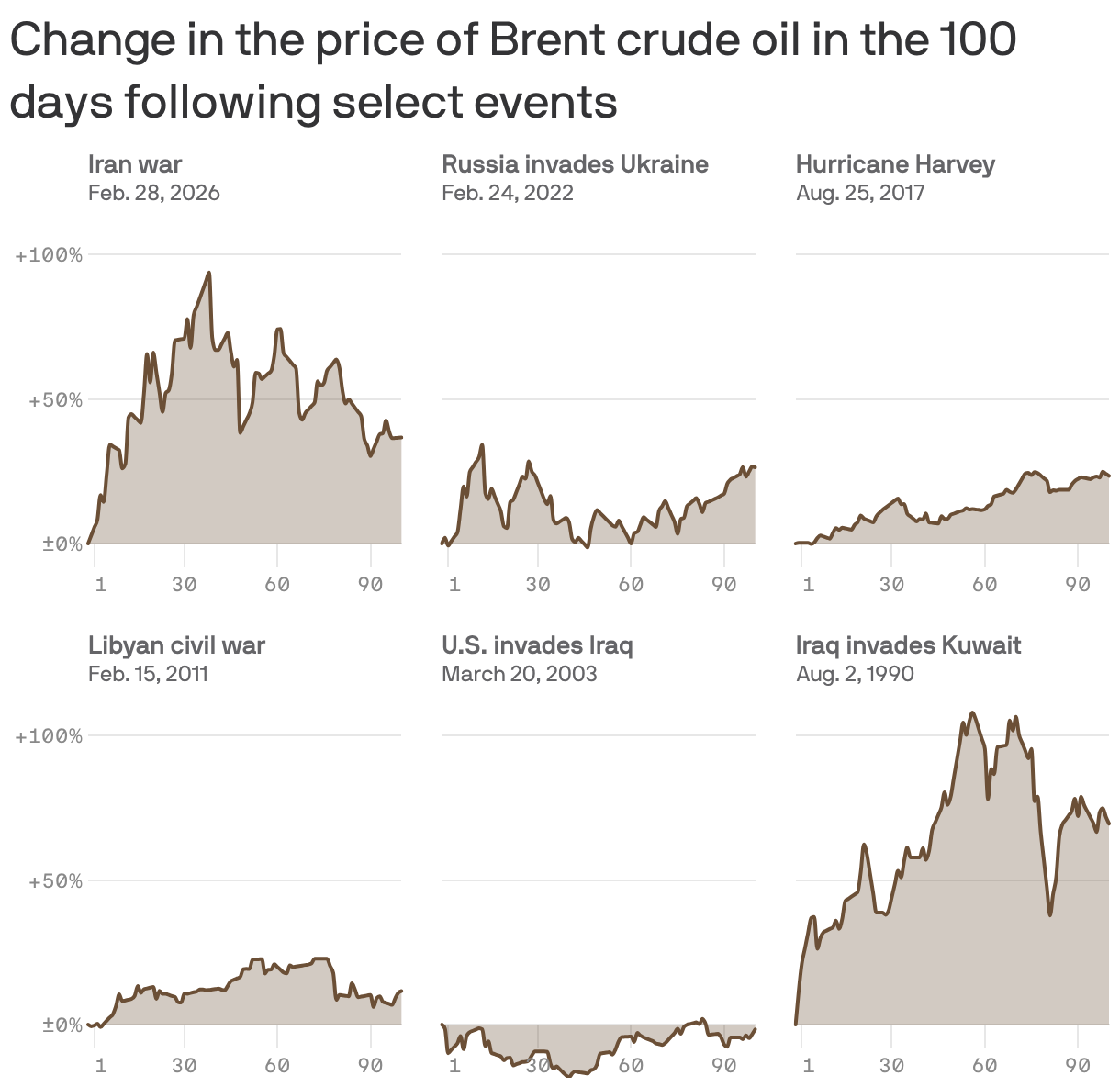
Oil shocks reach gas pumps and airfare with a delay, so relief takes time.
The bottom line: Even if the Iran war cools, gas and airfare will not snap back quickly.
What happened: Oil shocks pass through slowly, so household fuel and travel bills stay high for a while.
Why it matters: Families keep feeling the pinch, and the political backlash lasts longer.
What to watch: Watch crude prices, the national gas average, and airline fare changes.
Cheaper gas lifts consumer sentiment

Lower gas prices helped lift the University of Michigan's June consumer sentiment reading.
The bottom line: Cheaper gas gave household sentiment a modest lift.
What happened: The University of Michigan sentiment index rose in June, with expectations improving more than current conditions.
Why it matters: Even when inflation anger remains, fuel prices still move sentiment faster than most other signals.
What to watch: Watch whether gas stays cheap and whether sentiment keeps recovering.
AI boom is powering the economy

AI infrastructure spending is now lifting the real economy, not just equity prices.
The bottom line: AI spending is starting to act as a growth engine, not just a cost.
What happened: MarketWatch said AI infrastructure spending is boosting GDP and markets while driving more data-center construction.
Why it matters: AI-related spending now ripples into chips, power, construction, and the headline economy.
What to watch: Watch capex growth, profitability, and whether power constraints keep biting.
Stock rally collides with new worries

Investors are rechecking the durability of the rally as AI and rate expectations shift.
The bottom line: The rally continues, but AI and rate worries are starting to split the market.
What happened: The S&P 500 and Nasdaq fell for five straight sessions as investors worried about AI profitability and rates.
Why it matters: Markets are no longer carried by good earnings alone; growth hopes now meet higher funding costs.
What to watch: Watch semiconductor stocks, credit spreads, and shifts in rate-cut bets.
Technology
Anthropic’s Mythos gets limited return

The Commerce Department allowed a limited return for Mythos 5 after Anthropic addressed cybersecurity concerns.
The bottom line: Anthropic won permission, but access is still limited.
What happened: The Commerce Department allowed a limited return of Mythos 5 after Anthropic addressed the earlier security concerns.
Why it matters: Frontier-model access now depends on export controls and safety review as much as performance.
What to watch: Watch the next permission tier, the August cyber EO rollout, and whether Mythos 5 expands.
OpenAI gives GPT-5.5-Cyber more power

OpenAI updated its cyber-focused model to make it stronger and easier to use.
The bottom line: OpenAI pushed its defensive cyber tools up another notch.
What happened: The company refreshed GPT-5.5-Cyber with stronger capabilities and broader usability.
Why it matters: High-end AI is spreading to defenders, but misuse risk rises with it.
What to watch: Watch partner expansion, government deals, and changes to evaluation standards.
Phishing enters automation era

Huntress reported a sharp rise in device-code phishing as attacks became more automated.
The bottom line: Phishing is moving from email drafting to full attack automation.
What happened: Device-code phishing jumped in the first half of 2026, showing how AI and automation are scaling attacks.
Why it matters: Low-skill attack kits are spreading, and criminals are turning harder to stop on authentication tokens.
What to watch: Watch Microsoft auth abuse, the PhaaS market, and how companies harden MFA.
Anthropic and OpenAI join jobs push

States launched a retraining experiment to prepare workers for AI-driven job change.
The bottom line: The AI industry is starting to fund the response to the job shock it creates.
What happened: States and companies launched trials for retraining, wage insurance, and career coaching.
Why it matters: AI job displacement is turning into a practical state-and-company policy problem.
What to watch: Watch the pilot states, wider company participation, and whether retraining leads to new jobs.
Nvidia debuts humanoid robotics safety software

Nvidia introduced safety software for humanoid robots that operate around people.
The bottom line: Humanoid robots are becoming a software and safety contest for Nvidia.
What happened: Nvidia launched a safety system for humanoid robots that work around people.
Why it matters: Getting robots into real workplaces now depends on proving safety as much as capability.
What to watch: Watch early deployments, industrial adoption, and the race over control software.
Cross-cutting read
- Middle East conflict is moving diplomacy and budget fights at the same time.
- AI is starting to shape both market expectations and household costs.
- Court rulings and party realignment are speeding up U.S. political decision-making.
What to watch next
- Whether the Israel-Lebanon framework moves beyond pilot zones.
- Whether Congress trims or expands the Iran supplemental request.
- Whether Anthropic and OpenAI face tighter or looser limits next.
2026-06-28 中東停戦、AI規制、家計物価が同時に動く
米国の対イラン対応が外交、予算、移民司法、家計コスト、AI規制を連結させた。イスラエルとレバノンの枠組み合意は前進だが、実装はヒズボラの扱い次第だ。家計側ではガソリン、航空運賃、端末価格が落ちにくく、投資側ではAI支出が成長とインフレの両方を押し上げている。
政治
イスラエルとレバノンが枠組み合意
ワシントン主導の枠組みは前進だが、ヒズボラの扱いが実施の壁として残る。
要点: 合意は前進だが、ヒズボラを外したままでは実装が止まりやすい。
何が起きたか: イスラエルとレバノンがワシントンで枠組み合意に署名し、南レバノンの一部で撤収と再配置を始める道筋ができた。
なぜ重要か: 停戦を恒久化するには、武装勢力の扱いと治安権限の移管をどう処理するかが決定打になる。
今後の注視点: パイロット区域の運用、ヒズボラの反応、米国の支援条件を追う。
トランプ政権が87.6億ドルの追加予算を要求
ホワイトハウスは戦費と関連費用を含む87.6億ドルの追加予算を議会に求めた。
要点: 議会は対イラン戦費を予算で通すかどうかで割れる。
何が起きたか: 政権は87.6億ドルの追加予算を求め、国防費と関連支出を厚くする案を示した。
なぜ重要か: 戦争の費用を予算で通すかどうかが、議会の戦争権限論争をさらに強める。
今後の注視点: 上下両院の歳出委員会が積み増しや条件修正を入れるかを見る。
英首相スターマーが辞任
地方選の惨敗と党内圧力が重なり、労働党の指導部が交代局面に入った。
要点: 労働党の支持低下は、党首交代を英国政治の新しい焦点に変えた。
何が起きたか: スターマーは地方選の惨敗と党内圧力を受けて辞任し、次の党首選に道を開いた。
なぜ重要か: 英国は経済低迷と外交負担のなかで、政策より先に指導部を立て直す局面に入った。
今後の注視点: 有力後継の動きと、次の総選挙へ向けた路線転換を見る。
米最高裁が厳しい庇護制限を容認
最高裁は、国境を越えていない庇護申請者を拒む政権方針を認めた。
要点: 移民法をめぐる最高裁判断は、南部国境の運用をさらに厳しくした。
何が起きたか: 最高裁は、国境を越えていない庇護申請者を拒むトランプ政権の方針を認めた。
なぜ重要か: 法的土台が強まり、国境の待機列と審査能力の差がより直接に結果を左右する。
今後の注視点: 国境警備当局の実務変更、訴訟の次の波、支援団体の対応を追う。
NYの左派旋風で民主党が動揺
ニューヨークの予備選で左派候補が伸び、党内の路線対立が一気に表面化した。
要点: ニューヨークの左派勝利は、民主党の内部対立を選挙戦術の問題に押し上げた。
何が起きたか: DSA系候補が複数勝ち、民主党の有力議員が敗れる波乱になった。
なぜ重要か: 党は中道と左派のどちらに寄せるかで、2028年まで引きずる路線争いを抱えた。
今後の注視点: 党指導部の立て直し、追加予備選、全国的な資金流入を追う。
経済
AI価格ショックが始まった
メモリ高を背景に、端末やゲーム機の値上げが家計に広がり始めた。
要点: AI投資は、企業の設備投資だけでなく家計の端末価格にも跳ね返り始めた。
何が起きたか: AppleとMicrosoftがメモリ高を理由に、端末やゲーム機の値上げを進めた。
なぜ重要か: AIブームは仕事を奪う話だけでなく、消費者が払う価格を押し上げる段階に入った。
今後の注視点: 他の端末メーカー、メモリ価格、AIデータセンター投資の次の値上げ波を追う。
ガソリンと航空運賃はすぐ下がらない
原油の急変は、給油所と航空券の価格に遅れて反映される。
要点: イラン戦争が和らいでも、ガソリンと航空運賃はすぐには戻らない。
何が起きたか: 原油ショックは市場価格に遅れて伝わるため、家計の燃料費と旅行費は高止まりしやすい。
なぜ重要か: 家計は燃料と旅行費で痛みを感じ続け、政治の不満も長引く。
今後の注視点: 原油の戻り方、ガソリン平均価格、航空会社の運賃改定を追う。
ガソリン安で消費者心理が改善
燃料安が6月のミシガン大学消費者信頼感を持ち直させた。
要点: ガソリン安は、家計の気分を少しだけ持ち上げた。
何が起きたか: ミシガン大学の消費者信頼感は6月に上昇し、見通しの改善が現在の評価より大きかった。
なぜ重要か: 物価全体の不満が残っても、燃料価格は景気心理を動かす最速の指標になっている。
今後の注視点: ガソリンが安い水準を保てるか、信頼感が春の悪化前まで戻るかを見る。
AI投資が景気を押し上げる
AI関連の設備投資が、株式市場だけでなく実体経済の成長にも効き始めた。
要点: AI支出は、景気の重しではなく成長エンジンとしても効き始めた。
何が起きたか: MarketWatchは、AIインフラ投資がGDPや株式市場を押し上げ、データセンター建設を拡大させていると報じた。
なぜ重要か: AI関連支出は半導体、電力、建設の需要を広げ、実体経済の数字を動かす。
今後の注視点: 設備投資の伸び、AI関連の利益化、電力制約が続くかを見る。
株高に逆風が増える
AIと金利の見通しが揺れ、投資家は相場の持続力を再点検している。
要点: 株高は続いても、AIと金利の逆風が相場を分断し始めた。
何が起きたか: S&P 500とNasdaqは5日続落し、投資家はAI収益性と金利見通しを警戒した。
なぜ重要か: 市場は好決算だけでは支えきれず、成長期待と資金コストの綱引きが強まる。
今後の注視点: 半導体株、信用市場、利下げ観測の修正を追う。
技術
AnthropicのMythosに限定復帰
商務省は、サイバー懸念に対応したとして、Mythos 5の限定的な再開を認めた。
要点: 政府の許可は得たが、アクセスはまだ限定的だ。
何が起きたか: 商務省は、サイバー懸念への対応を受けて Mythos 5 の限定的な再開を認めた。
なぜ重要か: 最先端モデルの公開は、性能競争だけでなく輸出管理と安全審査に左右される。
今後の注視点: 次の許可範囲、8月のサイバーEO実装、Mythos 5 の対象拡大を追う。
OpenAIがサイバー版GPTを強化
OpenAIは、サイバー防御向けのモデルをより強力で使いやすい形に更新した。
要点: OpenAIは、防御側向けのサイバー機能をもう一段強くした。
何が起きたか: 同社は GPT-5.5-Cyber をより強力で、より広く使える形に更新した。
なぜ重要か: 防御側に高性能AIを配る流れが強まる一方、悪用リスクの管理が難しくなる。
今後の注視点: 認定パートナーの広がり、各国との提携、評価基準の更新を追う。
フィッシングが自動化段階へ
Huntressは、device-code phishing の急増を受けて攻撃の自動化が進んだと報告した。
要点: フィッシングは、メール作成から攻撃全体の自動化へ進んだ。
何が起きたか: device-code phishing が2026年上半期に急増し、AIと自動化が攻撃を量産している。
なぜ重要か: 高度な技術がなくても使える攻撃キットが増え、認証トークンを狙う犯罪が広がる。
今後の注視点: Microsoft系認証の悪用、PhaaS市場、企業の多要素認証対策を追う。
AnthropicとOpenAIが雇用対策へ
州政府は、AIによる職務再編に備える再訓練の実験を始めた。
要点: AI業界は、雇用ショックを説明するだけでなく、対策の資金も出し始めた。
何が起きたか: 州政府と企業が組み、再訓練や賃金保険、キャリア支援の試験を立ち上げた。
なぜ重要か: AIによる職務再編は抽象論ではなく、州政府と企業が組む実務課題になった。
今後の注視点: 試験州の成果、企業の参加拡大、再訓練が別職種へ移るかを見る。
Nvidiaがヒューマノイド安全基盤を公開
Nvidiaは、人の近くで動くヒューマノイド向けの安全ソフトを発表した。
要点: ヒューマノイドは、Nvidiaにとってソフトウエアと安全設計の勝負になった。
何が起きたか: Nvidiaは、人の近くで動くヒューマノイド向けの安全システムを発表した。
なぜ重要か: ロボットを現場へ入れる条件は、機能よりも安全性の証明に移っている。
今後の注視点: 最初の導入先、産業用途の拡大、制御層をめぐる競争を追う。
横断的な見立て
- 中東の軍事緊張は、外交合意と財政要求を同時に動かす。
- AIは市場の期待と家計の負担を同時に押し上げ始めた。
- 司法判断と党内再編が、米国内政治の意思決定速度を上げている。
追跡すべき未確定事項
- イスラエル・レバノン合意がパイロット区域を越えて進むか。
- 議会が対イラン追加予算を削るか積み増すか。
- AnthropicとOpenAIの制限と許可が今後さらに揺れるか。