A bronze body. Copper nipples. More than 2,000 years ago, the makers of the Boxer at Rest chose a different metal for a small part of the chest. 出典: The Metropolitan Museum of Art 2013
Researchers have also identified a Renaissance sculpture whose two nipples were carved differently. Contemporary artists have filmed themselves touching a nipple and used images of male nipples to challenge social media rules. 出典: Luke Syson & Valeria Cafà 2014; ART iT 2016; Chapman University 2015
Why devote so much attention to them? Following these works brings skin texture, light, desire, and social judgments about display into focus around a small part of the chest.
Three discoveries about nipples in art
-
Change the material. Some ancient bronze statues depict nipples in copper.
-
Catch the light. Sculpture research links nipple shape to contours and illumination.
-
Question social rules. Contemporary artists explore touch and gender differences in the treatment of nipples.
The examples range across ancient Egypt, Western art, and Japan. Links beside the relevant passages lead to museum accounts and research papers.
A bronze body, copper nipples: the ancient maker’s extra step
The Boxer at Rest is an ancient Greek bronze sculpture of an athlete after a bout. Its date remains debated; the Metropolitan Museum of Art places it between the late fourth and second centuries BCE. The muscular body bears injuries, with copper inlays depicting lips, nipples, and blood flowing from wounds. 出典: The Metropolitan Museum of Art 2013
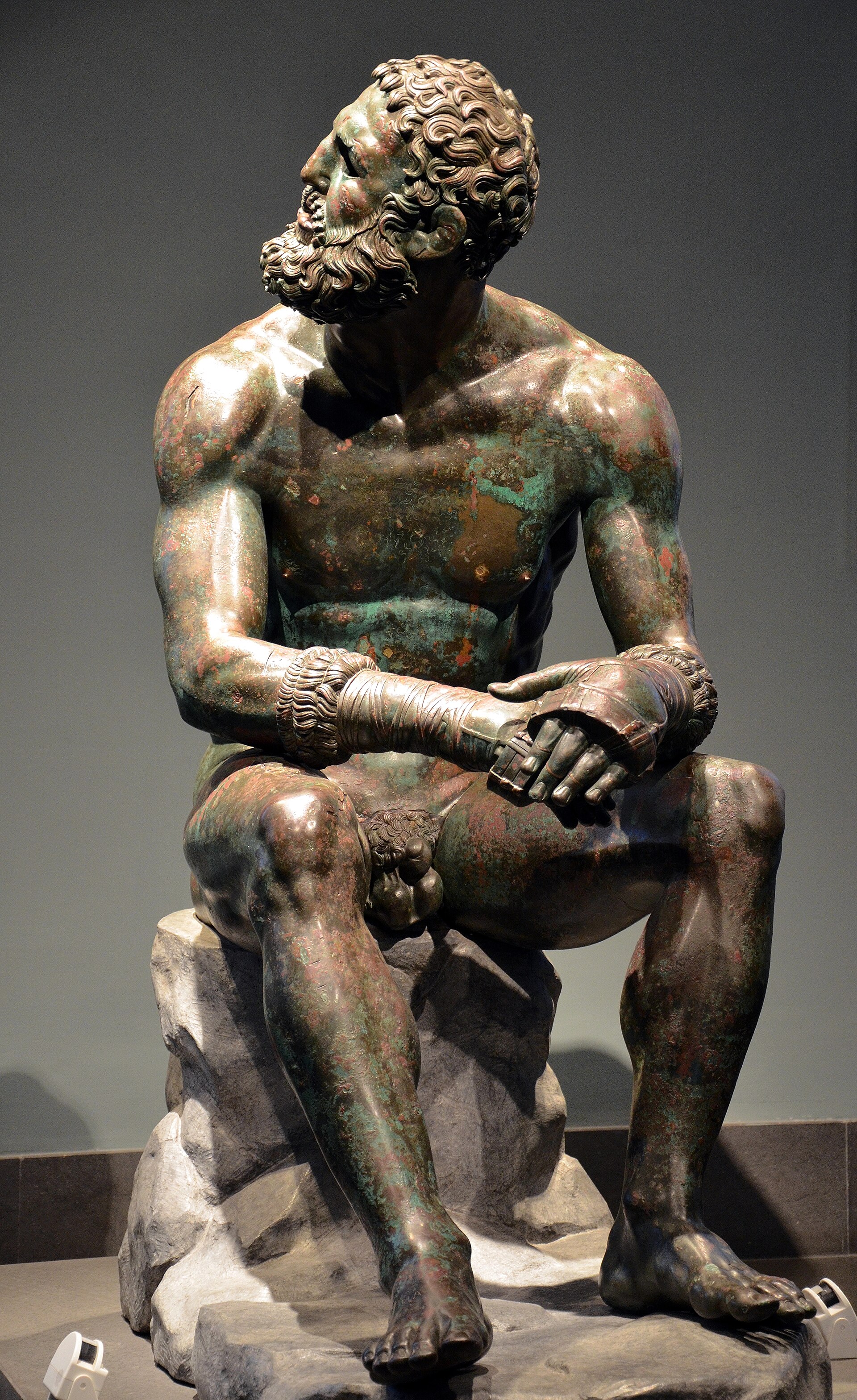
Inlay means fitting another material into a surface to create a pattern or form. Here the makers used the color difference between the bronze body and copper details. They worked beyond the bulges of muscles to distinguish areas of skin and portray an injured body.
A similar technique appears in the Ephebe as a Lampbearer from Pompeii, dated around 20–10 BCE. This domestic lampstand took Greek athlete statues as its model. Conservation in the 1990s established that its lips and nipples were copper. Heroic athletes and household furnishings both received this extra attention to nipples. 出典: J. Paul Getty Museum 2009–2013
Egyptian sculpture did it around 4,000 years ago, too. The MIHO MUSEUM’s painted wooden Statue of Nakht, dated around 1960–1916 BCE, has inlaid eyes and nipples. It depicts a young and beautiful body for the deceased’s ka, an entity understood to be born with a person and to continue after death. Carefully made nipples were not confined to Greek nude sculpture. 出典: MIHO MUSEUM
Flat on the right, projecting on the left: sculpting the chest for a view
Would carving both sides symmetrically produce a natural-looking body? Research on Tullio Lombardo’s Adam, around 1490–95, identifies a more intricate solution.
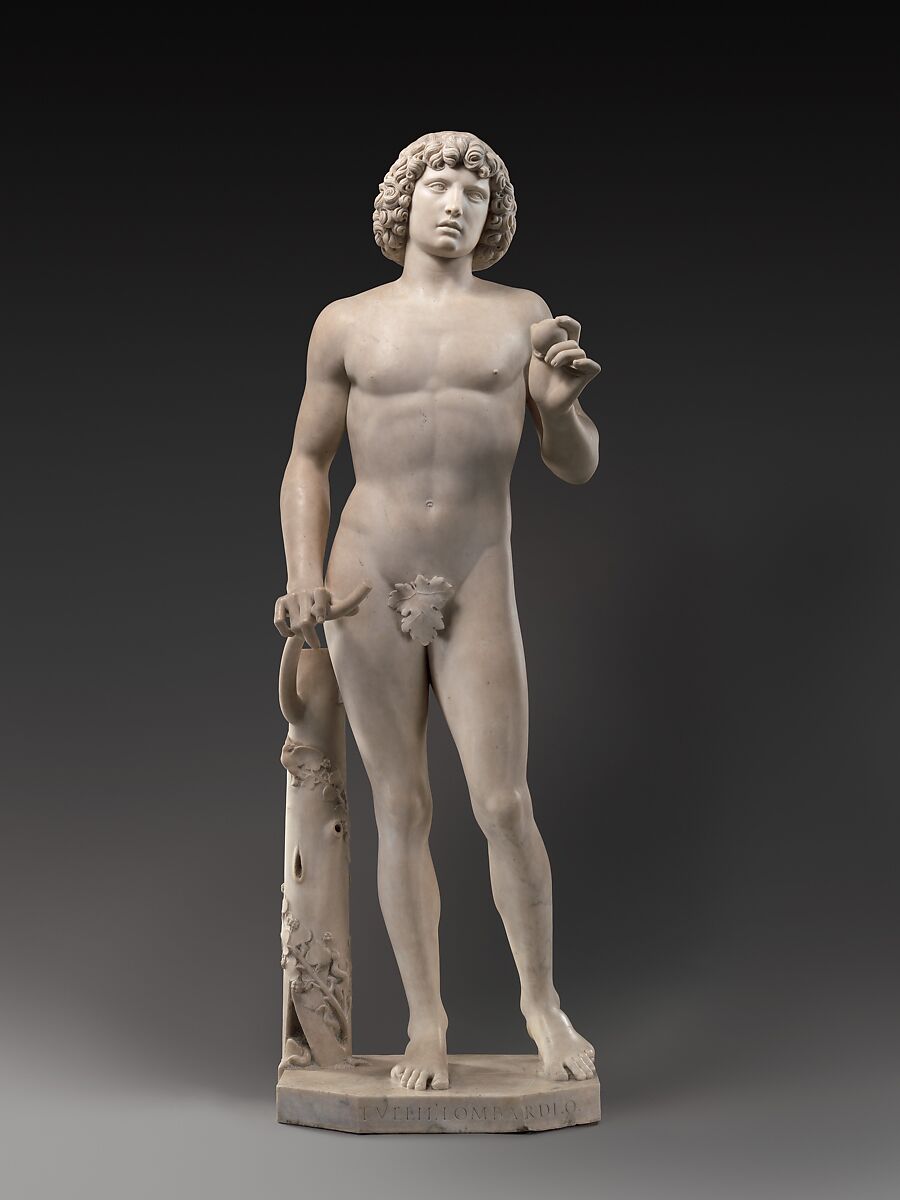
A 2014 paper describes the statue’s own right nipple as flat and its left nipple as projecting. The authors connect the flat right side to a smooth chest contour, and the projecting left side to catching light in a frontal view and enlivening the torso. 出典: Luke Syson & Valeria Cafà 2014
Changing nipple projection changes both illumination and the chest’s profile. The analysis concerns the overlap between representing a body and arranging how a sculpture appears.
This is not an intention recorded in the sculptor’s own words. It is the researchers’ interpretation of the form and probable lighting. Keeping that distinction in view reveals how finely sculptural choices can extend into nipples, contours, and light.
A saint’s nude body can also be sensual
Saint Sebastian, the martyr pierced by arrows, appears repeatedly in Christian art. Discussing a seventeenth-century ivory Saint Sebastian, the Met explains that the nude body could both invite sympathy for the suffering saint and offer a way to explore the sensuality of the male form. 出典: The Metropolitan Museum of Art
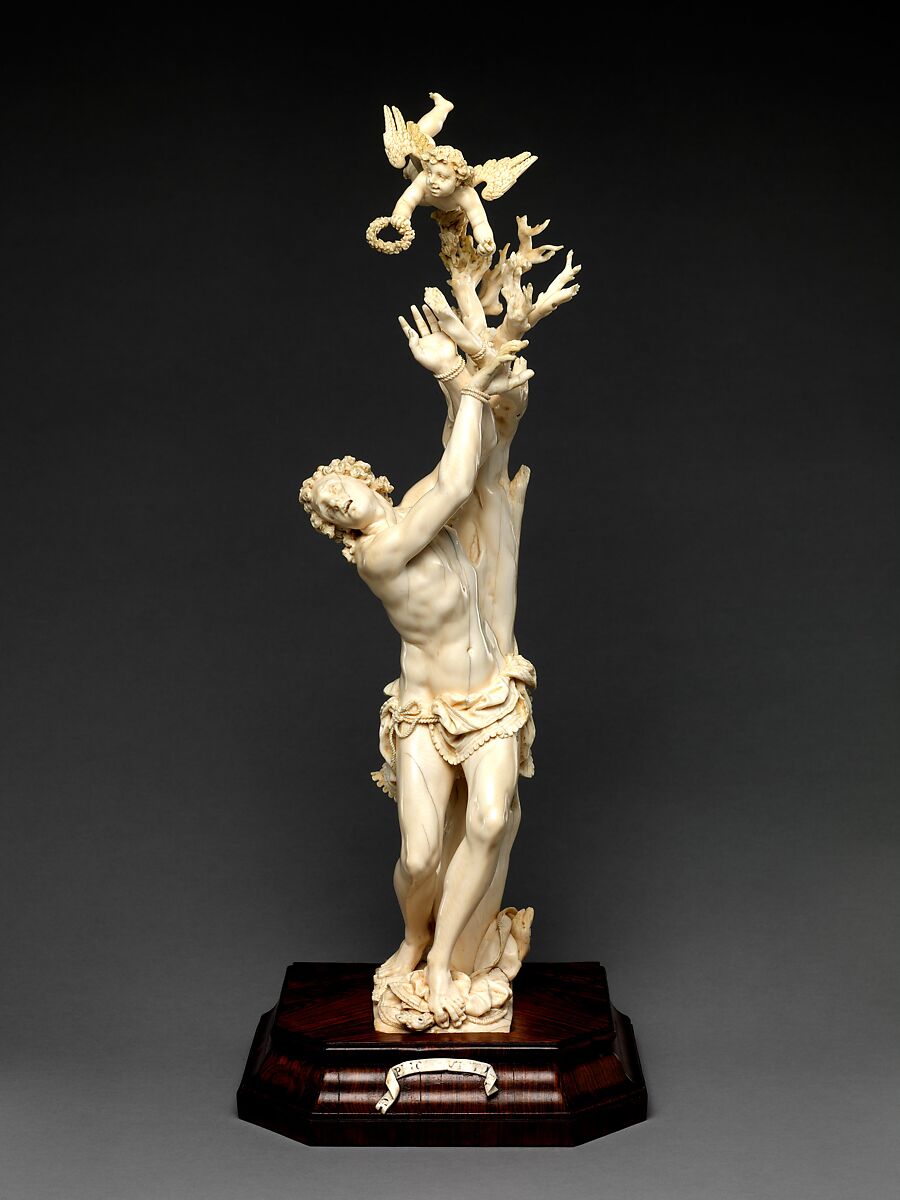
Devotion and attraction can coexist within one work. The chest and nipples appear as parts of that nude body.
The source discusses the role of the nude figure as a whole. It does not establish a special symbolic meaning for the saint’s nipples alone. How much of the body a source actually explains affects how far an interpretation can go.
Buddhist statues have nipples, too
For the seventh-century Standing Kannon Bosatsu from Hōryūji, Tokyo National Museum N-184, e-Museum lists the chest with depicted nipples alongside the smiling face as examples of natural expression. Its account treats nipples as details that give the figure a natural bodily appearance. 出典: National Institutes for Cultural Heritage, e-Museum
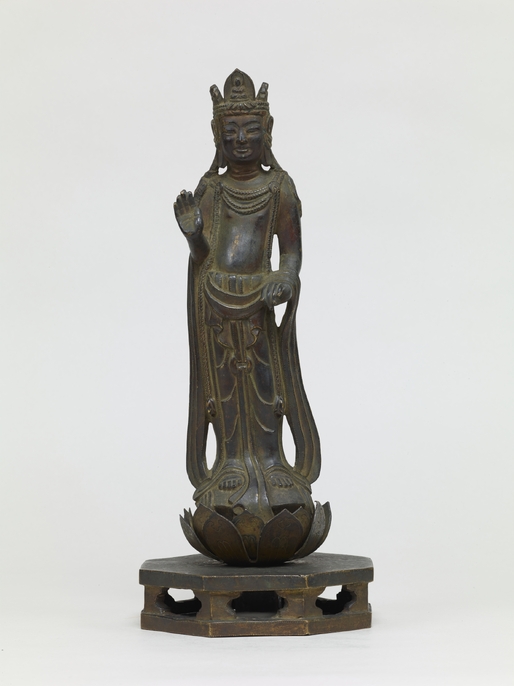
Rokuonji’s wooden Standing Fudō Myōō of 1225, formerly the principal image of the Saionji goma hall, also has nipples on its upper body. The Agency for Cultural Affairs explains that it may have worn actual clothing. The account connects the statue to faith in a living Buddhist presence. 出典: Agency for Cultural Affairs, Cultural Heritage Database
Carved nipples were not necessarily always exposed. Considering a statue’s unclothed form and considering the clothed figure that people worshipped can reveal different bodies.
Caution is needed before simply classifying a bodhisattva as male through modern categories. These Japanese religious images reveal bodily representations that the Western category of the male nude cannot fully explain.
From observing a body to draw it, to wanting to look
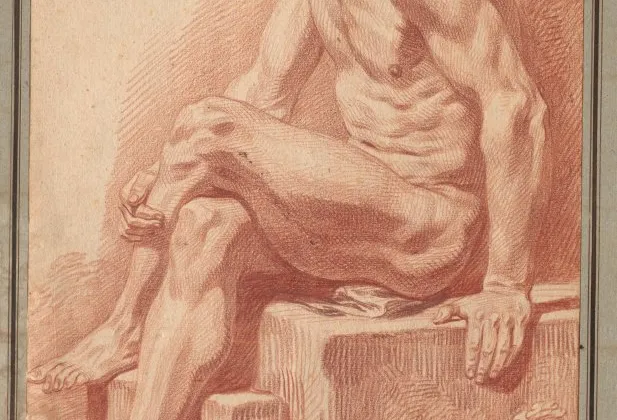
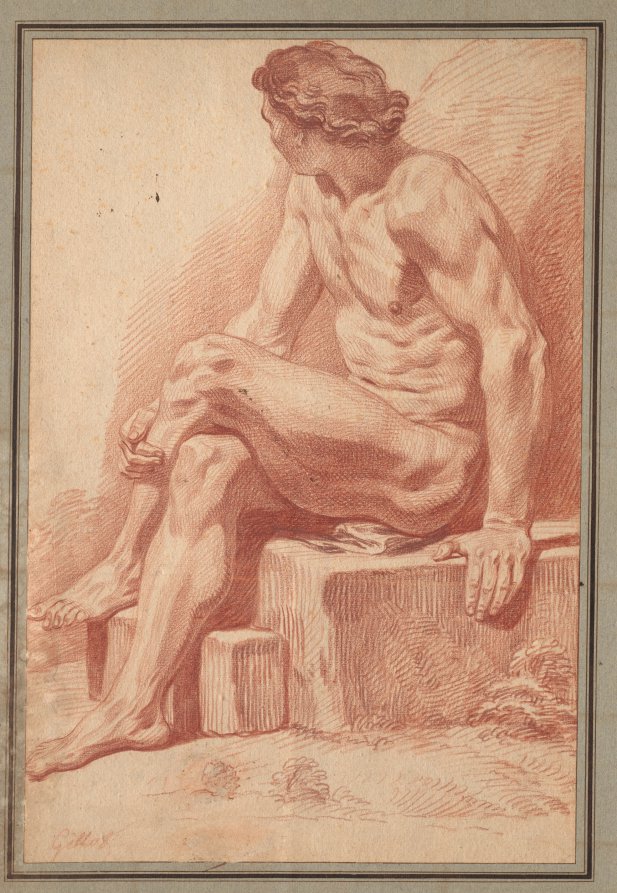
The nude male body also served as material for artistic training. Drawing from nude models became central in European academies, and a finished nude study itself could be called an academy. The Cleveland Museum of Art explains Claude Gillot’s Seated Male Nude, 1693–95, in this educational context. 出典: Cleveland Museum of Art
Traces of that training also appear in modern Japan. They include Kuroda Seiki’s Male Nude, Half-Length of 1889, drawings made by Kuroda and Kume Keiichirō in France, and anatomical notebooks. Tokyo National Museum uses these materials to describe artistic education that examined structures beneath the skin. 出典: Tokyo National Museum 2012
How does an artist depict the direction of the chest, muscles, and skin? Nipples can form part of that task of observing and representing the body. Sources on life drawing describe educational practices, rather than a specific meaning or drawing rule for nipples alone.
The twentieth-century photographer Robert Mapplethorpe made a work titled Nipple in 1988. His foundation’s official record identifies the photograph as depicting a Black man’s nipple. A body part becomes the subject and title of an entire photograph. 出典: Robert Mapplethorpe Foundation 2017
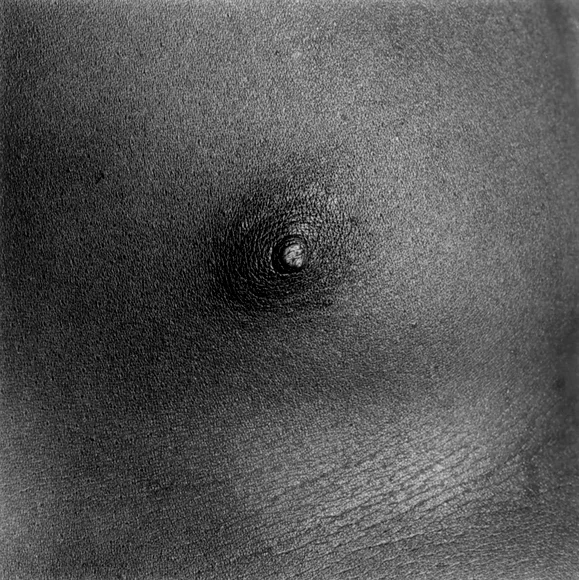
The J. Paul Getty Museum connects the classical forms in his male nudes with homoerotic content. The foundation’s account of the exhibition Escultura also links lighting that emphasizes bodily volume and compositions that isolate body parts to his interest in ancient and Renaissance sculpture. 出典: J. Paul Getty Museum 2012–2013; Tobias Ostrander/Robert Mapplethorpe Foundation 2021
Educational observation, attention to form, and attraction to someone’s body can overlap within the act of looking. The sources examined here did not establish a statement by the artist fixing one meaning for Nipple itself.
Ten minutes watching an artist touch his nipple
In Steve McQueen’s Cold Breath of 1999, fingers pinch, flick, and pull the artist’s own nipple. The silent image continues for about ten minutes. 出典: ART iT 2016
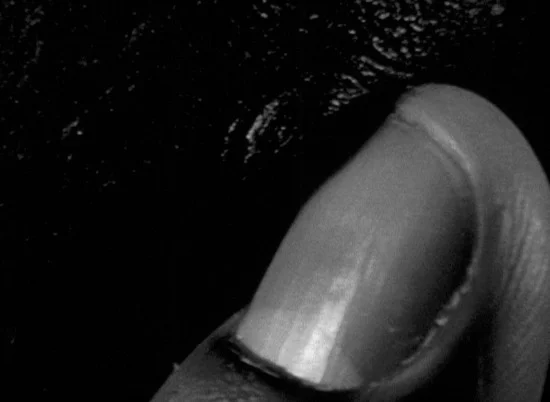
A viewer may respond differently than when looking at a painting or sculpture. Watching the intensity and repetition of contact may prompt imagining how it would feel on one’s own body.
A record of the 2016 exhibition in Japan discusses its floor-to-ceiling projection and relationship with viewers. It connects image scale and viewing distance to conditions that make viewers aware of their own bodies. 出典: ART iT 2016
The nipple works here as a subject that draws attention to the viewer’s own embodiment while looking at someone else. The work invites an imagined sensation of contact across the screen.
Paste on a male nipple: turning platform rules into art
In 2014, artist Micol Hebron made a template for placing an image of a male nipple over a female nipple. The method involved cutting and pasting a small image. 出典: Chapman University 2015
In her 2015 account, the project began after Instagram removed a topless photograph taken at an exhibition promoting breast cancer awareness. A male nipple was superimposed to cover a female nipple. She used the logic of the rules at the time to expose their gender distinction. 出典: Chapman University 2015
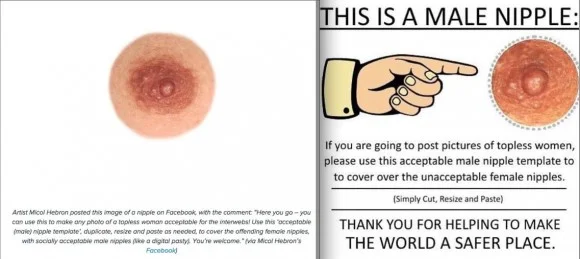
The work asks how judgments about publication change depending on which body part is shown and whose body it is understood to belong to. An image of a nipple becomes material for examining the institutions that permit looking.
This account concerns the project and the artist’s statements in 2014–15. It neither guarantees that this technique will allow a post nor describes current platform rules.
Hang a ladle from a nipple: a joke about usefulness
Attach rings to male nipples, stretch wire between them, and hang ladles or oven mitts from it. Shohei Takasaki described this idea in a 2020 interview about his solo exhibition sun, snake, nipples. He said he devised and exhibited five ways to put male nipples to use. 出典: Teiya Iwabuchi / Bijutsu Techo 2020
The amusing proposal begins with a familiar impulse to make something useful. Yet Takasaki also clarified that he did not intend to define male nipples as functionless. 出典: Teiya Iwabuchi / Bijutsu Techo 2020
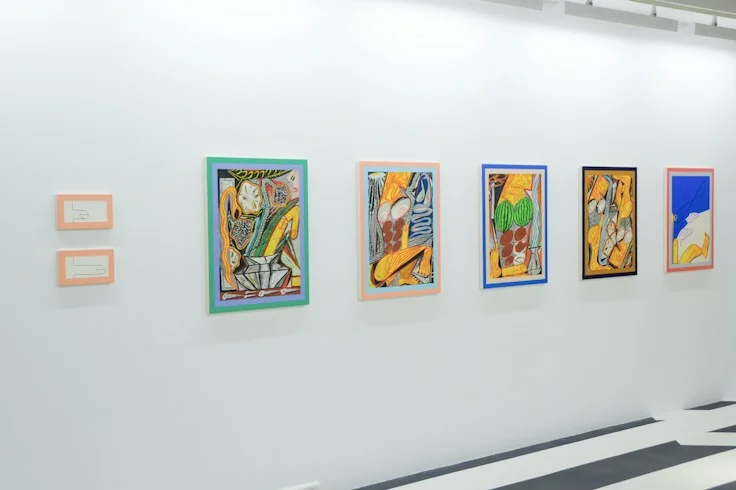
The hosting gallery’s statement asks whether something that appears nonfunctional needs to be made functional. Something meaningless to one person may have meaning for someone else. 出典: OIL by Bijutsu Techo 2020
The ladle proposal leads beyond biological function to why we demand uses even from bodies and art. A concrete joke can reveal habits in our own judgments of value.
Next time you see a male statue, look at the chest
A nipple inlaid with copper. A nipple carved to catch light. A nipple that names a photograph. The same body part receives different kinds of attention and creates different viewing experiences across works.
A simple progression from anatomical detail in the past to sexual meaning in the present cannot capture this history. Sensuality overlaps with a saint’s nude body, and modern photographs refer to classical sculpture. Realism, faith, education, and desire do not neatly replace one another from period to period.
The next male figure you encounter in a museum may reward a closer look at its chest. What material is it made from? Are the two sides alike? Where does light fall? A small detail such as a nipple can change how the whole work appears.
Reading artworks and weighing sources
Object information such as material and date, interpretations by museums or scholars, and viewers’ experiences or this article’s readings are different kinds of evidence. The text identifies the asymmetry of Adam as scholarly analysis and the platform project’s history as the artist’s account. The mere depiction of a nipple does not establish sexual intention or a unique symbolic meaning.
The article centers on Western art with examples from ancient Egypt and Japan. It is neither a global history nor an exhaustive list of works featuring male nipples.
The source notes record the scope of verification and weaknesses in the evidence.
Read further
体は青銅。乳首は銅。 2000年以上前の彫刻《休息する拳闘士》では、身体の小さな部位のために、わざわざ金属を変えている。 出典: The Metropolitan Museum of Art 2013
ルネサンスには、左右の乳首を同じ形に彫らなかったと研究者が指摘する像もある。 現代になると、自分の乳首に触れる映像を作品にする人や、男性乳首の画像を使ってSNSのルールを問い直す人まで現れる。 出典: Luke Syson & Valeria Cafà 2014; ART iT 2016; Chapman University 2015
なぜ、そこまで手をかけるのか。 作品を追うと、胸の小さな部位に、肌の質感、光、欲望、そして「何を見せてよいか」という社会の判断が集まってくる。
乳首をめぐる3つの発見
-
素材を変える。古代の青銅像には、銅で乳首を表した作例がある。
-
光をつかまえる。乳首の形を、輪郭や照明と結びつけて分析した彫刻研究がある。
-
社会を問い直す。現代の作家は、接触の感覚や、乳首の扱いの男女差を作品にする。
古代エジプト、西欧美術、日本の具体例をたどる。本文近くの出典リンクから、美術館の解説や研究論文へ進める。
体は青銅、乳首は銅。古代の職人のひと手間
《休息する拳闘士》は、試合後の選手を表した、古代ギリシアの青銅像だ。 制作年代には議論があり、メトロポリタン美術館(Met)は前4世紀末から前2世紀の間としている。 がっしりした身体には傷があり、唇や乳首、傷から流れる血などを銅の象嵌でつくっている。 出典: The Metropolitan Museum of Art 2013
象嵌(ぞうがん)は、別の材料をはめ込んで模様や形を表す技法のこと。 この像では、身体をつくる青銅と、細部に使う銅の色の違いを生かしている。 筋肉の盛り上がりだけでなく、肌の部分ごとの違いや、傷ついた身体までつくり込んだのだ。
似た工夫は、ポンペイから出土した《燭台を持つ青年》(前20~前10年頃)にもある。 こちらは、ギリシアの競技者像を手本にした室内用の燭台。 1990年代の修復によって、唇と乳首が銅製だったことが確認された。 英雄的な競技者像にも、暮らしのなかの調度にも、乳首をつくるひと手間があった。 出典: J. Paul Getty Museum 2009–2013
約4000年前のエジプト像にも。 MIHO MUSEUM所蔵の《ナクト像》(前1960~前1916年頃)は、木に着彩した人物像で、目と乳頭に象嵌が使われている。 死者のka(カァ。人とともに生まれ、死後も生き続けると考えられた存在)のために、若く美しい身体を造形した像だ。 乳頭を丁寧につくる仕事は、ギリシアの裸体像だけに見られるものではない。 出典: MIHO MUSEUM
右は平ら、左は出す。彫刻家が調整した胸の見え方
左右対称につくれば、自然な身体に見えるだろうか。 トゥッリオ・ロンバルド《アダム》(1490~95年頃)についての研究は、もう少し込み入った工夫を指摘している。
2014年の研究論文は、像自身の右乳首は平たく彫られ、左乳首は突き出していると分析する。 右側では胸の輪郭をなめらかに保ち、左側では正面から見たときに光を受けて、胴体の見え方に生気を与えるためだという。 出典: Luke Syson & Valeria Cafà 2014
乳首の突き出し方によって、光の当たり方も、横から見た胸の輪郭も変わる。 この研究が読んでいるのは、人体を写す工夫と、彫刻をどう見せるかという工夫が重なる場所だ。
この説明は、作者が書き残した制作意図ではない。 研究者が、像の形と想定される照明から導いた解釈である。 その区別をしたうえで見ると、乳首までが光と輪郭の調整に関わるという、彫刻の細やかさが見えてくる。
聖人の裸体に、官能性を感じてもおかしくない
矢を受ける聖セバスティアヌスは、キリスト教美術で繰り返し表された殉教者だ。 Metは、17世紀の象牙彫刻《聖セバスティアヌス》について、苦しむ聖人への同情を誘う一方、その裸体が男性の形の官能性を探る機会にもなったと説明している。 出典: The Metropolitan Museum of Art
信仰のための像であることと、その身体に魅力を感じることは、一つの作品のなかで重なりうる。 胸部や乳首も、そうした裸の身体の一部として見えてくる。
ここで資料が説明しているのは、裸体全体の働きだ。 「聖人の乳首には特定の意味がある」と、部位だけの象徴にまで広げる根拠にはならない。 身体のどこまでが具体的に説明されているかで、作品の読み方も変わる。
仏像の胸にも、乳首はある
法隆寺から伝わった《観音菩薩立像》(7世紀、東京国立博物館N-184)では、e国宝の解説が、乳頭を表した胸を、笑みを浮かべた顔などとともに「自然な表現」の一つとして挙げている。 乳頭は、像の身体に自然さを与える細部として説明されている。 出典: 国立文化財機構 e国宝
鹿苑寺の《木造不動明王立像》(1225年、西園寺護摩堂旧本尊)も、乳頭を表す上半身を持つ。 しかも文化庁の解説によると、この像には実際の衣を着せていた可能性がある。 生身の仏として受けとめる信仰とも関わる像だという。 出典: 文化庁 文化遺産データベース
つまり、乳首が彫られていても、いつも露出していたとは限らない。 像を裸の造形として見ることと、衣を着せ、祀ってきた姿を考えることでは、見えてくる身体が違う。
菩薩を、現代の分類にそのまま当てはめて「男性」と決めるのには慎重さが必要だ。 日本の宗教像を並べると、西洋の「男性裸体」という枠組みだけでは説明しきれない身体表現が見えてくる。
描くために見る身体から、見つめたい身体へ
男性の裸は、画家が学ぶための教材でもあった。 ヨーロッパのアカデミーでは、裸体モデルの写生が重要な訓練になり、完成度の高い裸体素描そのものが「アカデミー」と呼ばれた。 クリーヴランド美術館は、クロード・ジロー《座る男性裸体》(1693~95年)を、その教育の文脈で解説している。 出典: Cleveland Museum of Art
日本近代にも、その学びの跡がある。 黒田清輝《裸体・男(半身)》(1889年)や、黒田と久米桂一郎の滞仏時代の素描、解剖学のノートだ。 東京国立博物館はこれらを通じて、肌の下にある構造まで観察する美術教育を紹介している。 出典: 東京国立博物館 2012
胸の向きや筋肉、皮膚をどう描くか。 この場合の乳首も、人体を観察して形を捉える課題のなかに置ける。 ただし、裸体写生についての資料が述べるのは教育の仕組みであり、乳首単独の意味や描き方のルールではない。
一方、20世紀の写真家ロバート・メイプルソープには、その名も《Nipple(乳首)》(1988年)という作品がある。 財団の公式記録は、この写真を黒人男性の乳首として説明している。 身体の一部が、そのまま一枚の作品の主題と題名になる。 出典: Robert Mapplethorpe Foundation 2017
米国のJ・ポール・ゲティ美術館(Getty)は、彼の男性裸体写真群を、古典美術を思わせる造形と、男性同性愛的な内容が結びついたものとして説明する。 財団の展覧会《Escultura》の解説も、身体の立体感を強調する照明や、身体の一部を切り取る構図を、古代やルネサンスの彫刻への関心と結びつけている。 出典: J. Paul Getty Museum 2012–2013; Tobias Ostrander/Robert Mapplethorpe Foundation 2021
学ぶための観察も、形への関心も、誰かの身体に惹かれることも、「見る」という行為のなかで重なりうる。 ただし、《Nipple》一作について、作者自身が意味を一つに定めた発言は、今回の資料では確認できなかった。
自分の乳首に触れる映像を、10分間見る
スティーヴ・マックイーン《Cold Breath》(1999年)では、作家自身の乳首が、指でつねられ、つまびかれ、引っ張られる。 それが約10分、無音で映し出される。 出典: ART iT 2016
絵や彫刻を眺めるときとは、見る側の反応も変わりそうだ。 接触の強さや繰り返しを見て、自分の身体ならどう感じるかを想像するかもしれない。
2016年の日本での展示記録は、床から天井まで壁面を使う投影と、鑑賞者との関係を説明している。 映像の大きさや見る距離も、鑑賞者自身の身体を意識させる条件になるという。 出典: ART iT 2016
ここでは乳首が、他人の身体を見ている自分にも、身体があると気づくための主題として働く。 接触の感覚を、画面の向こうから想像させる作品だ。
男性の乳首を貼ればOK? SNSのルールを作品にする
2014年、アーティストのミコル・ヘブロンは、男性乳首の画像を女性乳首の上に貼るテンプレートをつくった。 小さな画像を切って貼る、という方法である。 出典: Chapman University 2015
本人が2015年に語った経緯では、乳がんへの理解を広める展覧会で撮ったトップレスの写真が、Instagramから削除されたことが発端だった。 女性の乳首を隠すために、男性の乳首を重ねる。 当時の規則の論理を使って、その男女差を指摘しようとした。 出典: Chapman University 2015
この制作が問いかけるのは、身体のどこを、誰のものとして扱うと、公開の判断が変わるのかということだ。 乳首の画像が、見ることを許す制度そのものを見せる材料になる。
これは2014~15年の制作と本人発言についての説明である。 「貼れば必ず投稿できる」という技術的な保証や、現在のSNS規約を説明するものではない。
乳首におたまを掛ける。その発想が問いかけること
男性の乳首にリングを付け、その間にワイヤーを渡して、おたまや鍋つかみを掛ける。 Shohei Takasakiは、2020年の個展《sun, snake, nipples》についてのインタビューで、そんなアイデアを語っている。 男性乳首を有効に使う方法を五つ考え、展示したという。 出典: 岩渕貞哉/美術手帖 2020
思わず笑ってしまう発想には、「何かの役に立てよう」という身近な考え方がある。 ただし本人は、男性乳首に機能がないと定義したいわけではない、とも補足している。 出典: 岩渕貞哉/美術手帖 2020
主催画廊のステートメントは、機能しないように見えるものを、機能させる必要があるのかと問いかける。 自分に意味がなくても、他人には意味があるかもしれない、と。 出典: OIL by 美術手帖 2020
そう考えると、乳首におたまを掛ける案は、生物学的な機能の説明を飛び越えて、私たちはなぜ、身体や芸術にまで用途を求めるのかという問いに届く。 笑いを誘う具体的な案から、価値を判断する自分の癖に気づくことができる。
次に男性像を見るときは、胸元にも
銅をはめ込んだ乳首。 光を拾うように彫られた乳首。 写真の題名になる乳首。 同じ部位でも、作品が変わると、そこにかけられた手間も、見る側に起こることも違ってくる。
「昔は身体の細部で、現代になって性的な意味を持った」という一本の筋では捉えきれない。 聖人の裸体に官能性が重なり、現代の写真には古典彫刻への関心がある。 写実、信仰、学び、欲望は、時代ごとにきれいに入れ替わるものではない。
美術館で男性像を見かけたら、胸元にも少し目を向けてみたい。 何でできているか。左右は同じか。どこに光が当たるか。 乳首という小さな入口から、作品全体の見え方が変わることがある。
作品の読み方と、資料の確かさについて
「素材や制作年などの作品情報」「美術館や研究者による解釈」「見る側の感覚やこの記事での読み取り」は、根拠の種類が違う。 本文では、左右の乳首の彫り分けは研究者の分析、SNS作品の経緯は本人発言というように、出どころを記した。 作品に乳首が描かれていることだけでは、作者の性的意図や、乳首固有の象徴までは決められない。
西欧美術を中心に、古代エジプトと日本の作例を加えた記事である。 世界全域の通史や、男性乳首を扱う作品の網羅的な一覧ではない。
作品情報の確認範囲と資料の弱点は、出典ノートにまとめた。