Published
-
How Musical Trance Illuminates the Origins of Religion
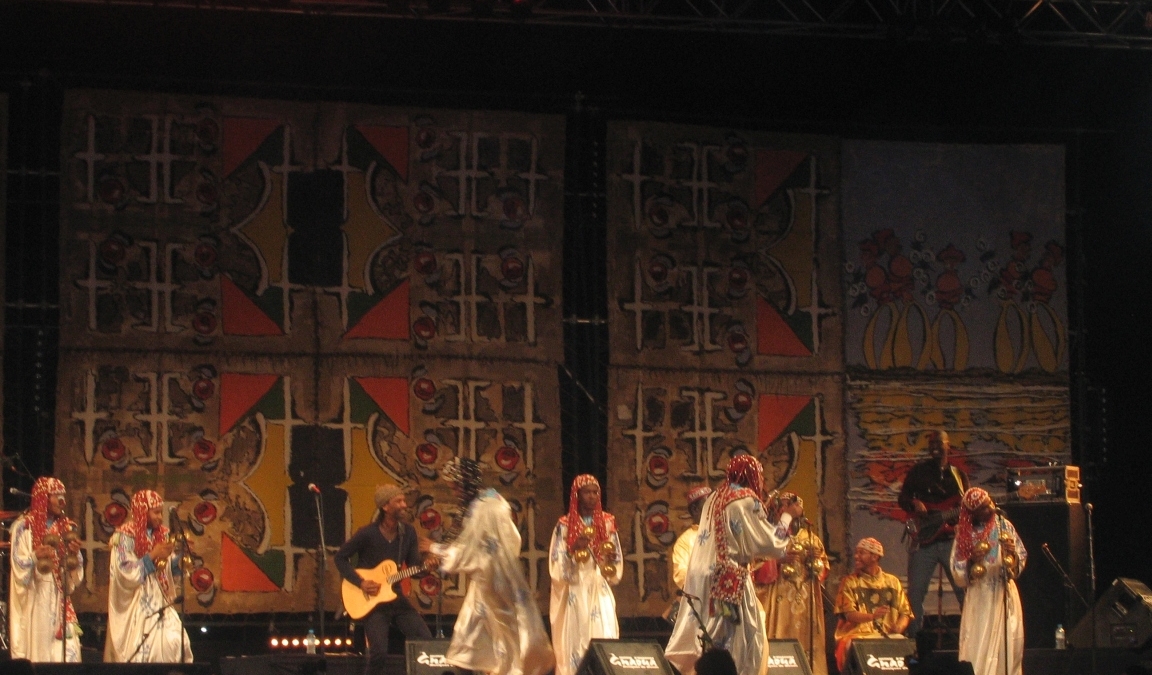
Photo by Anderson sady on Wikimedia Commons, CC BY-SA 3.0
How Musical Trance Illuminates the Origins of Religion
1. Executive Summary
The culturally useful research theme is not whether present-day rave-like trance groups are remnants of “primitive religion.” That framing would turn living communities into evolutionary specimens. The stronger question is this:
Under what conditions does music-induced collective altered consciousness become religious meaning, healing, social memory, and durable ritual form?
The answer requires three layers. First, there are contemporary groups and scenes in which repetitive sound, dance, chant, fasting, sleep loss, or drugs are used to cultivate altered states. Gnawa, Mevlevi Sema, zār, shamanic practices, charismatic worship, rave, and psytrance festivals all belong in the comparison, but they do not mean the same thing. Second, these cases are not fossils of early religion. They show how similar bodily affordances can be institutionalized in different ways. Third, physiology matters, but it does not settle interpretation. Rhythm, synchrony, exertion, attention, reward, arousal, and pain threshold can help produce powerful states; communities decide whether those states count as spirit possession, mystical discipline, divine presence, healing, awe, or a festival vibe.
       flowchart LR
  Beat["repetitive sound"] --> Sync["body synchrony"]
  Sync --> State["altered state"]
  State --> Meaning["religious meaning"]
  Meaning --> Institution["ritual institution"]
This is not a linear claim that sound automatically causes religion. It is a research model: sound can coordinate bodies; coordinated bodies can enter unusual states; communities interpret those states; repeated interpretation can become ritual institution.
2. Reframing The Question
“Primitive religion” is a historically loaded phrase. Nineteenth-century theorists such as E.B. Tylor linked religion’s origin to animism, comparison, and cultural evolution. Contemporary anthropology cannot simply inherit that frame, because it often treats present communities as survivals of an earlier human stage rather than as historical actors shaped by migration, slavery, urbanization, media, law, commerce, and self-interpretation. 出典: Timothy Larsen’s E.B. Tylor, religion and anthropology examines Tylor’s work on religion, animism, comparison, and cultural evolution in the history of anthropology.
The research problem should therefore be stated as a mechanism and institution problem:
How do music-induced trance practices translate bodily synchrony and altered awareness into spirit relations, healing authority, social bonding, or self-transformation?
Rave is valuable here precisely because it is not usually a doctrinal religion. Rave and psytrance festivals can combine repetitive sound, night-long dance, sleep loss, psychoactive drugs, threshold spaces, and strong group emotion. They allow comparison between explicitly religious ritual and secular or para-religious forms of collective transformation. 出典: Newson et al., I Get High With a Little Help From My Friends, study the “4Ds” of dance, drums, sleep deprivation, and drugs in raves/free parties, linking liminality and awe with personal transformation, local group bonding, and prosocial behavior.
3. Contemporary Comparative Cases
Contemporary music-induced trance cannot be reduced to one type. A workable comparison needs to separate spirit possession, disciplined mysticism, healing, charismatic attention, and festival transformation.
| Case | Contemporary form | Historical background | Religious or cultural interpretation |
|---|---|---|---|
| Gnawa | Moroccan music, brotherhood practice, healing ritual, and festival culture | At least the sixteenth-century history of slavery and slave trade, layered with Sufi, African, Arab-Muslim, and Berber elements | Invocation of ancestors and spirits, therapeutic possession, all-night rhythm and trance, and a mixture of sacred and secular forms |
| Mevlevi Sema | Sufi ceremony sustained in Konya, Istanbul, and Turkish communities worldwide | The Mevlevi order was founded in Konya in 1273 | Whirling, fasting, ney and tanbur music, disciplined transmission, and the soul’s ascent |
| zār | A possession ritual that continues in changing forms in Egypt, Sudan, Ethiopia, Iran, and diasporic contexts | A northeastern African possession complex altered by migration, public-space restrictions, recordings, and smartphones | Spirit possession, embodied distress, choric-musical therapy, gendered healing networks |
| Shamanic trance | Indigenous traditions and contemporary neo-shamanic practices, with large regional variation | Not one universal institution; the category must be used carefully | Drumming, chant, dance, fasting, sensory restriction, and other methods are interpreted as engagement with an invisible world |
| Rave and psytrance festival | Free parties, raves, psytrance festivals, and festival spirituality | Electronic sound technology, club culture, psychedelic counterculture, and drug policy | Not usually doctrinal religion, but often interpreted through liminality, awe, identity fusion, neotrance, and “the vibe” |
Gnawa is one of the clearest contemporary cases. UNESCO describes it as a set of musical events, fraternal practices, and therapeutic rituals mixing the secular and the sacred, with urban therapeutic possession rituals through all-night rhythm and trance ceremonies. 出典: UNESCO Intangible Cultural Heritage, Gnawa, describes Gnawa as Sufi brotherhood music with ancestors and spirits, a history linked to slavery and slave trade, and therapeutic possession rituals.
Mevlevi Sema provides an important contrast. It is not a rave-like release but a trained ceremonial discipline. UNESCO describes the Mevleviye as an ascetic Sufi order founded in 1273 in Konya and practiced today in Turkish communities worldwide, especially Konya and Istanbul. 出典: UNESCO Intangible Cultural Heritage, Mevlevi Sema ceremony, summarizes whirling dance, fasting, music, symbolic ascent, and intergenerational transmission.
zār is useful because it shows persistence through transformation. A 2025 OpenEdition article traces Cairo and Nile Delta zār recordings from the 1932 Arab Music Congress to village practitioner recordings from the 1970s through 1990s and contemporary circulation on smartphones. The point is not that zār is static. It persists by moving between public and private space, sacred space and recorded sound, marginalization and new media. 出典: Kawkab Tawfik, History, Technologies, and Circulation of Zâr Recordings in Cairo and the Nile Delta, treats zār as a northeastern African possession ritual involving choric-musical therapy, trance, recordings, smartphone circulation, and privatized ritual space.
Rave and psytrance should stay in the comparison without being forced into the category of religion. St John analyzes psytrance festivals as a form of “neotrance,” where technology, New Age spirituality, liminality, and collective effervescence intersect. 出典: Graham St John, Neotrance and the Psychedelic Festival, analyzes religio-spiritual characteristics of psytrance festivals, the relation between New Age and techno, technology, liminality, and the festival vibe.
4. Historical Background: Convergence, Not Survival
These cases do not form one continuous lineage. Mevlevi Sema belongs to Sufi discipline. Gnawa crosses slavery, Sufi practice, urban festival culture, and healing ritual. zār has been reshaped by sound recording, public-space constraints, and smartphones. Rave emerged from late twentieth-century electronic sound, club culture, counterculture, and drug politics.
The better hypothesis is convergence. Human bodies respond to repetitive rhythm, synchronized movement, breathing, darkness, fatigue, expectation, attention, and loud sound. Societies then interpret those responses through different vocabularies: spirits, ancestors, healing, prayer, self-transformation, friendship, resistance, or commerce.
Rouget’s classic argument remains decisive. He accepted that ritual trance is often associated with music, but rejected a universal law linking music and trance. The relation depends on systems of meaning and cultural behavior. 出典: University of Chicago Press, Music and Trance, summarizes Rouget’s argument that music and trance are related in many culturally specific ways and should not be reduced to a universal neurophysiological law. Becker extends this problem by joining scientific and cultural approaches to music, emotion, and trancing. 出典: Indiana University Press, Deep Listeners, presents Judith Becker’s work as a synthesis of scientific and cultural approaches to music, emotion, and trancing.
This changes how “origins of religion” should be studied. Religion need not begin as doctrine, scripture, or theology. It may also be modeled as a repeated linkage among body, sound, place, specialists, taboo, healing, gift, death, spirit, and memory. That is not proof of the true origin of religion. It is a comparative model of conditions under which religious institutions can form.
5. Religious Interpretation: Communities Classify The State
The same bodily alteration can be interpreted differently.
In possession settings, music can summon or index spirits and help participants enter a relation with them. Gnawa and zār are close to this type, though possession should not be reduced to “takeover.” It can include diagnosis, negotiation, care, gendered authority, and ritual expertise.
In mystical discipline, music and movement symbolize approach to God, self-emptying, and disciplined transformation. Mevlevi Sema’s whirling belongs here: it is an embodied technique within a trained Sufi order.
In charismatic worship, music orients attention toward God and can intensify divine presence as experienced by the worshipper. A 2022 experiment with 60 believers found that stronger focus on God corresponded with stronger religious experience and that religious music generated deeper worship experience than secular music. 出典: Walter and Altorfer, The psychological role of music and attentional control for religious experiences in worship, Quarterly Journal of Experimental Psychology, DOI 10.1177/17470218221075330, studied music conditions, attention, and worship experience.
In rave and psytrance settings, experience is not usually explained through spirits or doctrine. Participants may instead speak of awe, liminality, vibe, tribe, self-transformation, and belonging. This makes rave analytically useful: it shows how strong collective experience can emerge without a church, lineage, or explicit theology.
6. Physiological Mechanisms
Physiology is necessary but not sufficient. The strongest current claims concern synchrony, arousal, attention, reward, pain threshold, and affiliation.
| Input | Plausible mechanism | Evidence status | Anthropological caution |
|---|---|---|---|
| Repetitive rhythm | Prediction, entrainment, attentional fixation | Moderate | Rhythm alone does not create religious meaning |
| Synchronized movement | Self-other merging, coordination, trust | Moderate to strong | Who synchronizes, and who is excluded, matters |
| Exertive movement | Higher pain threshold and possible endogenous opioid involvement | Moderate | Pain threshold is a proxy, not a direct endorphin measure |
| Music-evoked emotion | Dopamine, cortisol, oxytocin, opioid peptides, and related systems | Moderate | Clinical and everyday music studies cannot be transferred wholesale to ritual |
| Ritual context | Expectation, role, permission, interpretation, memory | Strong qualitative grounding | Social classification turns body state into religious experience |
Tarr, Launay, Cohen, and Dunbar experimentally showed that synchrony and exertion during dance independently raised pain threshold and encouraged in-group bonding. 出典: Biology Letters, Synchrony and exertion during dance independently raise pain threshold and encourage social bonding, DOI 10.1098/rsbl.2015.0767, reports experimental findings on dance, pain threshold, and bonding.
Tarr, Launay, and Dunbar also review music and social bonding through self-other merging and neurohormonal mechanisms. Their key point for anthropology is that music supplies an external rhythmic framework capable of coordinating large groups. 出典: Frontiers in Psychology, Music and social bonding: self-other merging and neurohormonal mechanisms, DOI 10.3389/fpsyg.2014.01096, reviews rhythm, synchrony, endorphins, and social bonding.
Music neurochemistry remains promising but incomplete. Chanda and Levitin review evidence that music engages systems related to reward, motivation, pleasure, stress, arousal, immunity, and social affiliation, while noting that scientific inquiry into music’s neurochemical effects is still early. 出典: PubMed, The neurochemistry of music, records Chanda and Levitin, Trends in Cognitive Sciences, 2013, DOI 10.1016/j.tics.2013.02.007.
Recent shamanic trance research shows the same caution. A 2024 scoping review identified 27 eligible studies across phenomenology, psychology, neurophysiological functions, and clinical applications. It suggests that shamanic trances can be non-pathological and different from ordinary consciousness, but the evidence base remains small and heterogeneous. 出典: Marie et al., Scoping review on shamanistic trances practices, BMC Complementary Medicine and Therapies, 2024, DOI 10.1186/s12906-024-04678-w, emphasizes both multidisciplinary findings and methodological limitations.
7. Proposed Research Theme
The proposed research theme is:
A comparative ethnography of how acoustic synchrony becomes institutionalized as religious meaning.
The unit of analysis is not “groups that enter trance through sound.” It is the full cycle through which trance is classified, authorized, narrated, remembered, and connected to future participation.
Research Questions
- Which combinations of repetitive sound, dance, chant, fasting, sleep loss, drugs, and prayer reliably shape participants’ altered states?
- Which vocabulary classifies the state: possession, ecstasy, healing, divine presence, awe, vibe, or identity fusion?
- What remains after the event: healing, belonging, obligation, donation, taboo, discipleship, friendship, political sentiment, or consumption?
- How do recordings, smartphones, large sound systems, social media, and festival economies change ritual legitimacy and transmission?
Comparative Design
       flowchart TD
  Field["field observation"] --> Sound["sound and movement"]
  Field --> Interview["participant accounts"]
  Sound --> Compare["case comparison"]
  Interview --> Compare
  Compare --> Theory["institution model"]
The design should be comparative ethnography, not a short impressionistic visit. Candidate cases include Gnawa lila, Mevlevi Sema, private zār practice, psytrance festivals, and charismatic worship. Each case should be observed through the same units: preparation, first sound, bodily synchrony, peak experience, expert intervention, post-event interpretation, and connection to future participation.
Physiological measures can be added only with restraint: heart rate, movement synchrony, subjective altered-state scales, pain threshold, sleep loss, sound level, and tempo. Recording and wearables touch sacredness, secrecy, gender, safety, drugs, and legal risk, so consent and ethics review are not optional. The aim is not to debunk mystical experience. It is to explain how bodily conditions, cultural interpretation, and institutional consequences join.
8. Hypotheses and Open Questions
This theme can test five hypotheses.
- Bodily synchrony is not sufficient for religious trance, but it is a major condition for intensified group experience.
- Trance becomes religious institution when specialists, stories, diagnosis, taboo, repeated schedules, participant roles, and post-event interpretation stabilize it.
- Rave-like experience approaches religion not simply when sound or drugs are intense, but when liminality and awe become personal transformation and durable belonging.
- Recording and smartphones do not only weaken ritual. In zār, they can help practices persist in private spaces after public space becomes harder to use.
- The origins of religion can be studied as a process in which bodily synchrony, transcendence interpretation, healing, spirit relations, and collective memory become repeatable.
The application boundary extends beyond religion. Music festivals, sports crowds, political rallies, military training, corporate events, and online communities all use rhythm, synchrony, threshold time, and strong feeling to create belonging. The difference is what remains afterward: obligation, ethics, salvation, healing, lineage, authority, and prohibition are much thicker in religious ritual than in most commercial events.
9. Risks And Limits
The first risk is calling contemporary practice “primitive religion.” That does not explain; it freezes living people in someone else’s past. The more precise phrase is “contemporary comparative cases that illuminate hypotheses about early religious formation.”
The second risk is pathologizing trance. zār and possession trance intersect with psychiatric categories, but they cannot be exhausted by them. Mianji and Semnani examine zār in relation to DSM-IV and DSM-5 while treating it as a cultural concept of distress. 出典: Mianji and Semnani, Zār Spirit Possession in Iran and African Countries, Iranian Journal of Psychiatry, analyze zār as group distress, culture-bound syndrome, and cultural concept of distress.
The third risk is physiological reductionism. Rhythm, EEG, dopamine, endorphins, and oxytocin matter, but they do not explain why a state is read as God, spirit, healing, or community.
The fourth risk is overgeneralizing rave studies. Retrospective self-report and drug-use contexts limit causal claims. Awe and identity fusion for one participant may be entertainment, escape, commercial consumption, or danger for another.
10. Conclusion
Groups that use music, repetitive rhythm, and dance to cultivate trance-like states do exist today. Some are explicitly religious, such as Gnawa, Mevlevi Sema, zār, shamanic practices, and charismatic worship. Others, such as rave and psytrance festivals, are secular or para-religious comparison cases.
The anthropologically valuable question is not whether these are primitive religion. It is how acoustic synchrony changes bodies, and how changed bodies are translated into spirits, healing, community, self-transformation, and institutions.
This theme does not prove the origin of religion. It decomposes possible conditions of religious formation: repeated sound, synchronized bodies, threshold time, interpreting community, and institutions that carry the experience forward. That combination lets us see religion not only as belief, but as a cultural technology for organizing body and society at the same time.
References
- Gilbert Rouget, Music and Trance, University of Chicago Press.
- Judith Becker, Deep Listeners, Indiana University Press.
- UNESCO Intangible Cultural Heritage, Gnawa.
- UNESCO Intangible Cultural Heritage, Mevlevi Sema ceremony.
- Kawkab Tawfik, History, Technologies, and Circulation of Zâr Recordings in Cairo and the Nile Delta.
- Martha Newson et al., I Get High With a Little Help From My Friends.
- Bronwyn Tarr, Jacques Launay, and Robin Dunbar, Music and social bonding.
- Bronwyn Tarr et al., Synchrony and exertion during dance.
- Nolwenn Marie et al., Scoping review on shamanistic trances practices.
音響的トランスは宗教の起源をどう照らすか
1. エグゼクティブサマリー
本レポートで立てる文化人類学的な調査テーマは、「音楽による集団的変性意識が、どの条件で宗教的意味、治癒、共同体記憶、規範へ制度化されるのか」である。出発点は、レイブのような反復音楽と身体同期によってトランス状態に入る集団が現在も存在するか、という問いである。しかし、その問いをそのまま「原始宗教の生き残り探し」にすると、現代の宗教共同体や音楽文化を進化段階の標本として扱う危険がある。したがって、ここでは「原始宗教」を実体名ではなく、宗教起源論をめぐる仮説群として扱う。
結論は四点である。
- 音楽、反復リズム、踊り、睡眠不足、薬物、断食、祈祷を組み合わせるトランス儀礼は現在もある。Gnawa、Mevlevi Sema、zār、シャーマニックな実践、Pentecostal/charismatic worship、psytrance/rave festival は、それぞれ異なる制度と解釈を持つ。
- それらは「宗教の起源を再現する化石」ではない。むしろ、身体同期という生理学的アフォーダンスが、神霊、祖霊、治癒、自己変容、共同体帰属という意味体系に組み込まれる複数の道筋を示している。
- 生理学的には、反復音響、運動同期、呼吸、疲労、覚醒、報酬系、痛覚閾値、注意制御が関与する。ただし、音が自動的に宗教的トランスを生むわけではない。Rouget が強調したように、音楽とトランスの関係は文化的意味体系に依存する。 出典: Rouget の古典的整理は University of Chicago Press の Music and Trance に要約されている。出版社解説は、音楽とトランスの間に普遍法則はなく、文化的文脈の意味体系に依存すると説明する。
- 価値ある調査テーマは、宗教を「信念体系」だけでなく「音響、身体、場、解釈、記憶、制度が結合した技術」として見る比較民族誌である。
       flowchart LR
  Beat["反復音響"] --> Sync["身体同期"]
  Sync --> State["変性意識"]
  State --> Meaning["宗教的解釈"]
  Meaning --> Institution["儀礼制度"]
この図は、音楽がトランスを直接「発生」させるという単線モデルではない。音楽は身体を同期させ、同期した身体が変性意識を経験し、その経験が共同体の語彙で解釈され、反復可能な儀礼制度へ組み込まれる、という研究仮説である。
2. 問いの立て直し
「原始宗教」という言葉は慎重に扱う必要がある。19世紀の宗教起源論では、Tylor の animism 論や比較進化論が、宗教の発生を人類文化の段階論として説明しようとした。現代の文化人類学では、この発想をそのまま採用しない。現在生きている宗教や音楽文化を「過去の残存」と見ると、当事者の歴史、政治、都市化、メディア、商品化、自己解釈を消してしまうからである。 出典: Timothy Larsen の E.B. Tylor, religion and anthropology は、Tylor が宗教の発生、animism、比較法、文化進化論をどのように結び付けたかを歴史的に検討している。
そこで、本レポートの研究テーマを次のように定義する。
音楽誘導トランスは、身体同期と変性意識を、どのように宗教的意味、治癒、社会的絆、集団記憶へ変換するのか。
この問いの文化人類学的価値は、宗教を「信じる内容」だけでなく、「身体を揃え、場を作り、経験を分類し、共同体がそれを記憶する実践」として分析できる点にある。レイブはこの問いにとって重要な比較対象である。なぜなら、レイブや psytrance festival は、必ずしも教義宗教ではないのに、反復音響、夜通しの踊り、境界的な時間、集団的高揚、自己変容の語彙を持つからである。 出典: Newson et al. の Frontiers in Psychology 論文 I Get High With a Little Help From My Friends は、rave/free party における dance, drums, sleep deprivation, drugs の組み合わせを 4Ds と呼び、liminality と awe を介した個人変容、local raver group への結合、向社会行動との関連を調べている。
3. 現在存在する比較対象
現代に存在する音楽誘導トランスの場は、一つの型に収まらない。比較するなら、少なくとも「神霊・祖霊との関係」「修行・祈り」「治癒」「世俗的祝祭」「自己変容」を分けて見る必要がある。
| 事例 | 現在の存在形態 | 歴史的背景 | 宗教的・文化的解釈 |
|---|---|---|---|
| Gnawa | モロッコで音楽、友愛組織、治癒儀礼、祭礼として継承 | 少なくとも16世紀以降の奴隷制・奴隷交易、Sufi、アフリカ、Arab-Muslim、Berber の重層 | 祖霊・精霊の喚起、治癒、all-night rhythm and trance、secular と sacred の混合 |
| Mevlevi Sema | Konya、Istanbul、世界のトルコ系共同体で継承されるSufi儀礼 | 1273年にKonyaで成立した Mevlevi order | whirling、断食、ney や tanbur を含む音楽、魂の上昇として解釈される訓練された儀礼 |
| zār | エジプト、Sudan、Ethiopia、Iran などで形を変えながら存続 | 北東アフリカ起源の possession ritual。公共空間の制約、移住、録音、スマートフォンで変容 | 霊的所有、身体・心理的苦痛の解釈、合唱的音楽療法、女性の治癒ネットワーク |
| shamanistic trance | Indigenous tradition と neo-shamanic practice の双方で研究対象 | 地域差が大きく、単一の「シャーマニズム」に還元できない | 太鼓、歌、踊り、断食、感覚制限などで意識状態を変え、不可視世界との交渉として語られる |
| rave / psytrance festival | free party、rave、psytrance festival、festival spirituality | counterculture、club culture、psychedelic culture、音響技術、薬物文化の交差 | 教義宗教ではないが、liminality、awe、identity fusion、neotrance、the vibe として経験される |
Gnawa は、現在存在する宗教的音楽トランスの強い事例である。UNESCO は Gnawa を、世俗と聖性を混ぜる音楽イベント、友愛実践、治癒儀礼として説明し、都市部では all-night rhythm and trance による therapeutic possession ritual があると記述している。 出典: UNESCO Intangible Cultural Heritage の Gnawa は、2019年登録の項目として、Sufi brotherhood music、祖先・精霊の喚起、奴隷制・奴隷交易に遡る歴史、治癒的 possession ritual を説明している。
Mevlevi Sema は、レイブ的な「解放」よりも、訓練、型、教団、象徴に重心を置く。UNESCO は Mevleviye を1273年にKonyaで成立した ascetic Sufi order と説明し、今日も世界のトルコ系共同体に存在し、Konya と Istanbul が中心だと述べる。 出典: UNESCO Intangible Cultural Heritage の Mevlevi Sema ceremony は、whirling dance、断食、音楽、魂の上昇の象徴、世代間伝承をまとめている。
zār は、治癒と possession をめぐる比較に有効である。2025年の OpenEdition 論文は、Cairo と Nile Delta の zār 録音史を追い、1932年 Arab Music Congress の録音、1970-1990年代の村落実践者の録音、スマートフォン上の流通を分析している。ここで重要なのは、zār が単に「消えゆく伝統」ではなく、公共空間の制約、共同体の移動、私的空間への移行、録音メディアによって実践形態を変えている点である。 出典: Kawkab Tawfik の History, Technologies, and Circulation of Zâr Recordings in Cairo and the Nile Delta は、zâr を北東アフリカ起源の possession ritual とし、choric-musical therapy、trance、録音、スマートフォン流通、私的空間化を扱う。
レイブや psytrance festival は、宗教ではなくても、比較から外すべきではない。St John は Dancecult の論文で psytrance festival の religio-spiritual characteristics を neotrance として論じ、festival を liminal な場、technology と spirituality が交差する場として読む。 出典: Graham St John の Neotrance and the Psychedelic Festival は、psytrance festival の宗教的・霊性的特徴、New Age と techno の接合、technology、liminality、the vibe を分析している。
4. 歴史的背景: 連続ではなく収束
音楽誘導トランスの歴史を一本の系譜にすることはできない。Mevlevi Sema はSufi修行の歴史を持ち、Gnawa は奴隷制、Sufi実践、都市祭礼、治癒儀礼を横断し、zār は公共空間とメディア環境の変化に応じて姿を変え、rave は20世紀後半の電子音響技術、club culture、counterculture、薬物政策の中で形成された。
したがって、「レイブは原始宗教の再来である」とは言えない。より正確には、異なる社会が似た身体的資源を別々に制度化してきた、という収束の仮説である。人間の身体は、反復リズム、集団運動、疲労、呼吸、音量、暗闇、期待、注意集中に反応する。社会は、その反応を神霊、祖霊、治癒、祈り、自己変容、友情、反抗、商品化の語彙で解釈する。
Rouget の価値は、まさにこの点にある。彼は音楽とトランスの結び付きを認めながら、太鼓やリズムの普遍的な神経効果だけで説明する還元主義を退けた。Becker はこの議論を、音楽、emotion、trancing の科学的・文化的接合へ広げた。 出典: Indiana University Press の Deep Listeners は、Judith Becker が科学的アプローチと文化的アプローチを結び、music, emotion, trancing を論じた書籍として紹介している。
この観点からは、宗教起源論の焦点も変わる。宗教は、最初から教義、聖典、神学として現れたのではなく、身体、音、場、語り、記憶、専門家、禁忌、贈与、治癒、死者との関係が結び付く過程で制度化された可能性がある。これは「宗教の真の起源」を断定する主張ではなく、観察可能な現代事例から、初期宗教形成にあり得たメカニズムをモデル化する研究テーマである。
5. 宗教的解釈: トランスの意味は共同体が決める
同じように見える身体状態でも、宗教的解釈は大きく異なる。
第一に、possession 型では、音楽は霊や神格を呼び、参加者がそれと関係を結ぶ媒介になる。Gnawa や zār はこの型に近い。ただし、possession は単なる「乗っ取り」ではない。苦痛の診断、交渉、治療、共同体のケア、ジェンダー化された役割、専門家の権威を含む。
第二に、mystical discipline 型では、音楽と運動は自我の放棄や神への接近を表す。Mevlevi Sema の whirling は、自由な陶酔ではなく、訓練された身体技法であり、Sufi的な上昇の象徴として理解される。
第三に、charismatic worship 型では、音楽は神への注意を集中させ、共同体で経験される divine presence を強める。2022年の実験研究は、60人の信者を対象に worship experience の音楽条件と注意制御を調べ、神への focus が強いほど宗教経験が強くなること、宗教曲が世俗曲より深い経験を生むことを示した。 出典: Walter and Altorfer の The psychological role of music and attentional control for religious experiences in worship は、Quarterly Journal of Experimental Psychology 掲載、DOI 10.1177/17470218221075330 の実験研究である。
第四に、rave/psytrance 型では、経験は必ずしも神霊語彙で説明されない。参加者は awe、liminality、vibe、tribe、self-transformation、belonging の語彙を使うことがある。この型は「宗教ではないから関係ない」のではなく、宗教的制度がなくても、身体同期が集団帰属と意味生成を生む条件を示す。
6. 生理学的には何が起きているのか
生理学的説明は必要だが、それだけでは足りない。現時点で比較的堅いのは、音楽と集団運動が同期、覚醒、報酬、痛覚、注意、社会的接近を変えるという範囲である。
| 入力 | あり得る生理・心理機構 | 根拠の強さ | 人類学的な注意点 |
|---|---|---|---|
| 反復リズム | 予測、entrainment、注意の固定 | 中 | リズムだけで宗教的意味は生まれない |
| 同期運動 | self-other merging、協調、信頼 | 中から強 | 誰と同期するか、誰が除外されるかが重要 |
| 強い運動 | 痛覚閾値上昇、内因性 opioid 系の関与可能性 | 中 | pain threshold は endorphin の代理指標であり直接測定ではない |
| 音楽による情動 | dopamine、cortisol、oxytocin、opioid peptides などの関与 | 中 | 臨床・日常音楽研究から儀礼へそのまま外挿できない |
| 儀礼文脈 | 期待、役割、許可、解釈、記憶 | 強い定性的根拠 | 生理状態を宗教経験として分類する社会的条件が必要 |
Tarr, Launay, Cohen, and Dunbar の実験は、dance における synchrony と exertion がそれぞれ pain threshold と in-group bonding を高めることを示した。これは、集団で踊ることが単なる娯楽ではなく、身体を通じて集団結合を変える可能性を示す。 出典: Biology Letters の Synchrony and exertion during dance independently raise pain threshold and encourage social bonding は、DOI 10.1098/rsbl.2015.0767 の実験研究である。
Tarr, Launay, and Dunbar のレビューは、music による social bonding を self-other merging と neurohormonal mechanisms の二つから説明する。ここで重要なのは、音楽が外部の rhythmic framework を提供し、大規模な同期を可能にするという点である。 出典: Frontiers in Psychology の Music and social bonding: self-other merging and neurohormonal mechanisms は、DOI 10.3389/fpsyg.2014.01096 のレビューである。
音楽の神経化学については、Chanda and Levitin が reward, motivation, pleasure、stress and arousal、immunity、social affiliation に関わる神経化学系をレビューした。ただし、彼ら自身も科学的 inquiry はまだ初期段階だと位置づけている。 出典: PubMed の The neurochemistry of music は、Chanda and Levitin, Trends in Cognitive Sciences, 2013, DOI 10.1016/j.tics.2013.02.007 を記録している。
シャーマニック・トランス研究も同じ限界を持つ。2024年の scoping review は、27本の研究を phenomenology、psychology、neuro-physiological functions、clinical applications に分類し、shamanic trance が非病理的で、通常意識とは現象学的・神経生理学的に異なる可能性を示す一方、研究の小規模性、統制群の不足、一般化の難しさを強調する。 出典: Marie et al. の Scoping review on shamanistic trances practices は、BMC Complementary Medicine and Therapies, 2024, DOI 10.1186/s12906-024-04678-w のオープンアクセス論文である。
7. 提案する調査テーマ
本レポートから導ける調査テーマは、次のように定式化できる。
音響的同期化が宗教的意味へ制度化される条件の比較民族誌。
対象は、「音でトランスになる集団」ではなく、「トランスをどう分類し、誰が正当化し、どのように記憶し、次回の儀礼へ接続するか」である。
研究質問
- 反復音響、踊り、歌、断食、睡眠不足、薬物、祈祷のどの組み合わせが、参加者の変性意識を安定的に誘導するのか。
- その状態は、possession、ecstasy、healing、divine presence、awe、vibe、identity fusion のどの語彙で解釈されるのか。
- 経験後に何が残るのか。治癒、帰属、義務、寄付、禁忌、弟子入り、友情、政治性、消費行動のどれへ接続されるのか。
- 録音、スマートフォン、巨大音響、SNS、festival economy は、儀礼の正当性と伝承をどう変えるのか。
比較デザイン
       flowchart TD
  Field["現地観察"] --> Sound["音響・身体記録"]
  Field --> Interview["参加者語り"]
  Sound --> Compare["事例比較"]
  Interview --> Compare
  Compare --> Theory["制度化モデル"]
方法は、短期の印象記ではなく、比較民族誌が望ましい。候補は Gnawa の lila、Mevlevi Sema、zār の私的実践、psytrance festival、charismatic worship である。各ケースで、儀礼前準備、音の始まり、身体同期、ピーク経験、専門家の介入、終了後の語り、次回参加への接続を同じ観察単位で記録する。
生理学的測定を加えるなら、心拍、動作同期、主観的変性意識尺度、痛覚閾値、睡眠不足、音量、テンポを最小限にする。録音やウェアラブルは、聖性、秘匿性、ジェンダー、安全、薬物使用、法的リスクに触れるため、当事者の同意と研究倫理審査を前提にする。ここでの目的は「神秘体験の正体を暴く」ことではなく、身体的条件、文化的解釈、制度的帰結の結合を説明することである。
8. 仮説と応用上の注意
このテーマは、次の仮説を検証できる。
- 身体同期は宗教的トランスの十分条件ではないが、集団経験を強める基盤条件である。
- トランスが宗教制度に変わるには、専門家、物語、診断、禁忌、反復日程、参加者の役割、終了後の解釈が必要である。
- レイブ的経験が宗教に近づくのは、音響と薬物の強度が高い時ではなく、liminality と awe が個人変容と長期の帰属へ接続される時である。
- 録音とスマートフォンは儀礼を弱めるだけではない。zār のように、公共空間から追いやられた実践を私的空間で持続させることもある。
- 「宗教の起源」は、単一の信念の発明ではなく、身体同期、超越解釈、治癒、死者・霊との関係、共同体記憶が束になって反復可能になる過程として研究できる。
応用範囲としては、この研究は宗教理解だけでなく、音楽フェス、スポーツ応援、政治集会、軍事訓練、企業イベント、オンラインコミュニティにも応用できる。どれも、反復音響、身体同期、境界的時間、強い感情を使って帰属を作る。ただし、宗教儀礼と商業イベントを同一視してはいけない。違いは、経験後に残る義務、倫理、救済、治癒、系譜、権威、禁止の厚みにある。
9. リスク・限界
第一のリスクは、現代の実践を「原始宗教」と呼んでしまうことである。これは説明ではなく、当事者を過去に閉じ込める分類である。研究上は「初期宗教形成に関する仮説を照らす現代比較事例」と呼ぶべきである。
第二のリスクは、トランスを病理化することである。zār や possession trance は、精神医学的カテゴリーと接触することがあるが、それだけで説明できない。Mianji and Semnani は zār を DSM-IV/DSM-5 の文脈で検討しつつ、cultural concept of distress として理解する必要を示している。 出典: Mianji and Semnani の Zār Spirit Possession in Iran and African Countries は、Iranian Journal of Psychiatry 掲載の narrative review で、zār を group distress、culture-bound syndrome、cultural concept of distress の観点から扱う。
第三のリスクは、生理学的還元である。リズム、脳波、dopamine、endorphin、oxytocin は重要だが、それだけでは「なぜこの状態が神、霊、治癒、共同体の経験として読まれるのか」を説明できない。
第四のリスクは、レイブ研究の一般化である。rave/free party の研究には retrospective self-report や drug-use context の限界がある。ある参加者にとっての awe や identity fusion は、別の参加者にとっては娯楽、逃避、商業消費、危険経験かもしれない。
10. 結論
現在、レイブのような音楽、反復リズム、踊りによってトランス状態を得る集団は存在する。宗教的儀礼としては Gnawa、Mevlevi Sema、zār、各地の shamanistic practice、charismatic worship があり、世俗的・準宗教的比較対象として rave や psytrance festival がある。
しかし、文化人類学的に価値があるのは、「それらは原始宗教か」と問うことではない。価値があるのは、音響的同期化がどのように身体を変え、その身体経験がどのように神霊、治癒、共同体、自己変容、制度へ翻訳されるのかを比較することである。
この研究テーマは、宗教の起源を断定しない。その代わり、宗教が成立し得る条件を分解する。反復音、同期する身体、境界的な時間、解釈する共同体、経験を引き受ける制度。その結合が、宗教を信念の体系ではなく、身体と社会を同時に編成する文化技術として見せてくれる。
参考情報
- Gilbert Rouget, Music and Trance, University of Chicago Press.
- Judith Becker, Deep Listeners, Indiana University Press.
- UNESCO Intangible Cultural Heritage, Gnawa.
- UNESCO Intangible Cultural Heritage, Mevlevi Sema ceremony.
- Kawkab Tawfik, History, Technologies, and Circulation of Zâr Recordings in Cairo and the Nile Delta.
- Martha Newson et al., I Get High With a Little Help From My Friends.
- Bronwyn Tarr, Jacques Launay, and Robin Dunbar, Music and social bonding.
- Bronwyn Tarr et al., Synchrony and exertion during dance.
- Nolwenn Marie et al., Scoping review on shamanistic trances practices.