Published
-
How to Read Types of States and Country Names
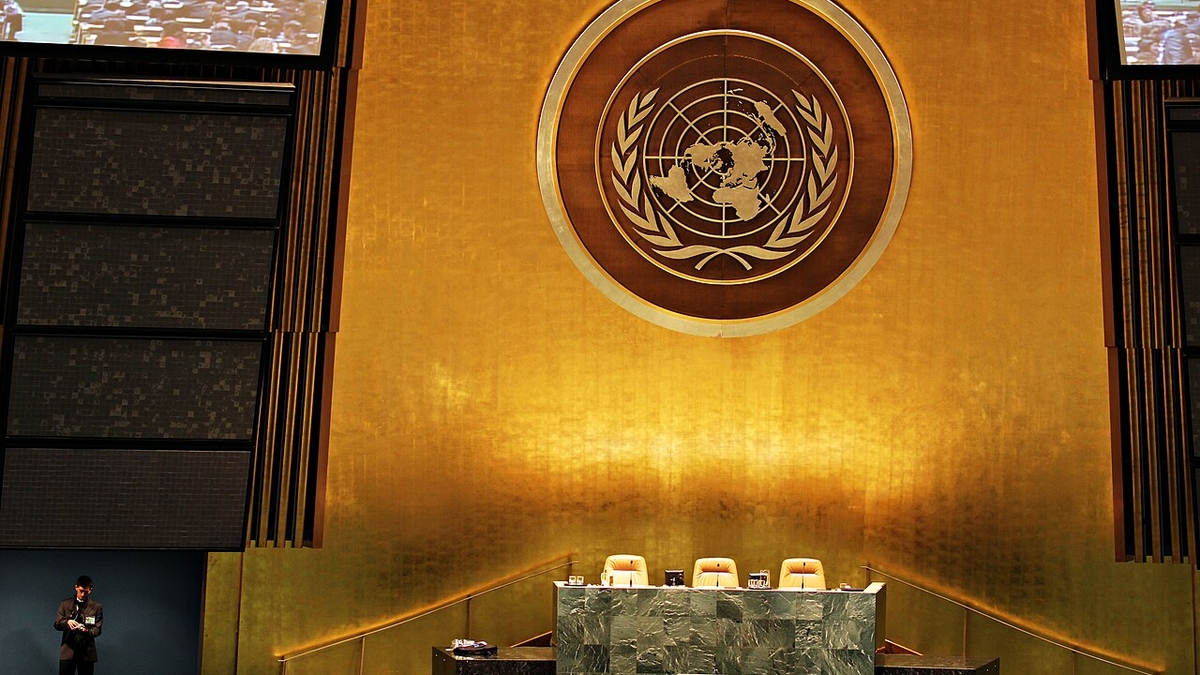
Basil D Soufi, Wikimedia Commons, CC BY-SA 3.0
How to Read Types of States and Country Names
1. Executive Summary
Words such as republic, kingdom, federal, united, people’s, democratic, Islamic, and Commonwealth do not all describe the same kind of thing. Some words describe the head of state. Others describe the relationship between the central government and territorial units. Others are ideological, historical, or diplomatic self-descriptions. Reading a country name alone as proof of democracy, independence, or federalism is therefore unreliable.
The first reading step is to separate sovereign state, UN member, statistical or sporting country, autonomous country, and official self-description. The United Nations currently has 193 Member States. If the two non-member observer states are added, the UN-centered diplomatic baseline becomes 195 entities. But the UN M49 statistical list has 248 countries or areas, the World Bank WDI covers 217 economies, the IOC recognizes 206 National Olympic Committees, and FIFA has 211 member associations. In other words, the answer to “how many countries are there?” changes unless the counting rule is stated first. Source: United Nations, Member States and UN Member States on the Record show the current 193 members. UN, Non-Member States identifies the Holy See and the State of Palestine as non-member observer states. The statistical country-or-area list is UNSD, M49; this report checked the English Country or Area table on June 16, 2026 and counted 248 rows. World Bank WDI shows 217 economies at WDI home.
After that, read five layers separately: head of state, territorial power structure, executive system, ideological language, and international legal status. A republic usually lacks a hereditary monarch, but that does not guarantee democracy. A kingdom or constitutional monarchy can still be a parliamentary democracy. Federal and united terms usually speak to central-local authority, not to whether a country has a monarch. People’s Republic and Democratic People’s Republic are often political self-descriptions, not evidence of competitive elections.
       flowchart TD
  A["Country name"] --> B["Statehood status"]
  B --> C["Head of state"]
  C --> D["Territorial structure"]
  D --> E["Executive system"]
  E --> F["Separate name and reality"]
The bottom line is simple. A country name is not just a map label; it is a compressed claim about how the state describes itself. But that claim does not automatically prove institutional reality, democratic quality, human-rights conditions, or the degree of international recognition.
2. Counting Countries by Definition
The narrowest standard answer is 193: the current number of UN Member States. That is the cleanest diplomatic baseline. Yet it is not the whole map of state-like entities. The UN General Assembly also has two non-member observer states, the Holy See and the State of Palestine. If UN seating is the starting point, the first useful baseline is therefore 195 entities: 193 members plus two observer states.
Statistics, trade, sport, and autonomy systems use broader units. Overseas territories, autonomous territories, special administrative regions, constituent countries, limited-recognition entities, and non-self-governing territories may appear as separate units in data or sports governance even when they are not separate UN Member States. The following table shows how far the word country can stretch.
| Counting frame | Count | What is counted | How to read it |
|---|---|---|---|
| UN Member States | 193 | Members under the UN Charter | Standard count of sovereign states |
| UN Member States + observer states | 195 | 193 members + Holy See + State of Palestine | Wider diplomatic count of state-like entities |
| UN M49 countries or areas | 248 | Country and area codes used by the UN Statistics Division | Statistical units, not recognition decisions |
| World Bank WDI economies | 217 | Economies used in World Bank data series | Economic data units |
| IOC National Olympic Committees | 206 | NOCs recognized in the Olympic Movement | Sporting representation units |
| FIFA member associations | 211 | Football association membership units | States, territories, and regional associations mixed |
| UN Non-Self-Governing Territories | 17 | Territories treated by the UN as not yet fully self-governing | Decolonization category, not independent-state count |
| Commonwealth members | 56 | Independent and equal Commonwealth countries | Voluntary association, mostly former British Empire links |
| Commonwealth realms | 15 | Independent countries sharing the British monarch | Independent states sharing the same monarch |
The distribution shows three layers. First, there is a core diplomatic and international-law layer: the 193 UN Member States. Second, there is a surrounding political layer of observer states, limited-recognition entities, and non-self-governing territories. Third, there is an institutional layer in which M49, WDI, the IOC, and FIFA count countries or areas for purposes other than recognition.
Formal country-name words also vary widely. The UN official country-name materials include Republic, Kingdom, State, Federal Republic, Islamic Republic, People’s Democratic Republic, Principality, Sultanate, Emirates, and other terms. These words are clues to institutional history and self-description, but they are not measures of democracy or autonomy. Republic helps identify the absence of a monarch, but it does not prove competitive elections. Kingdom identifies a monarch, but it does not tell you whether the monarchy is constitutional or absolute. Source: Formal country names were checked against the UN DGACM official names of countries PDF. The term grouping here is a reading guide for names, not a governance-quality rating.
3. Split the Name into Six Axes
Country-name terms are easier to read when split into six axes.
| Axis | Common words | What the axis tells you |
|---|---|---|
| International legal status | State, sovereign state, observer state, territory | Whether the entity is an independent state, constituent unit, or territory |
| Head of state | Republic, Kingdom, Principality, Sultanate, Emirate | Whether there is a hereditary monarch |
| Territorial power structure | Federal, United States, Federation, Confederation | How power is divided between the center and territorial units |
| Executive system | Parliamentary, Presidential, Semi-presidential | Who holds executive authority and how it relates to the legislature |
| Ideology and legitimacy | Democratic, People’s, Socialist, Islamic, Arab | The state’s political, religious, revolutionary, or national self-description |
| Historical composition | Commonwealth, United Kingdom, Union | How multiple kingdoms, states, colonies, or territories came together |
The important point is that one country name can contain several axes at once. Federal Republic combines a republican head-of-state claim with federal territorial structure. United Kingdom is a kingdom with multiple constituent parts, but it is not a federation like the United States or the UAE. Democratic People’s Republic combines democratic, people’s, and republic language, but the name alone does not prove free elections or separation of powers.
Government systems also need to be separated from labels. The Australian Parliamentary Education Office lists monarchy, dictatorship, oligarchy, theocracy, and one-party rule as forms of government outside democracy. Source: The Australian Parliamentary Education Office, Apart from democracy what other forms of governments are there?, gives a concise classification of non-democratic government forms.
4. Sovereign State and UN Status
The first question is not whether something is casually called a country, but whether it is a state in international-law terms. The classic entry point is Article 1 of the Montevideo Convention, which lists a permanent population, a defined territory, government, and capacity to enter into relations with other states. This is not a complete decision rule for every modern status dispute, but it remains a useful starting point for thinking about statehood. Source: Montevideo Convention on the Rights and Duties of States Article 1 lists permanent population, defined territory, government, and capacity to enter into relations with other states.
Statehood, recognition, and UN membership are related but not identical. There are 193 UN Member States. There are also non-member observer states: the Holy See and the State of Palestine. UN status is a major clue to international standing, but it does not erase the political disputes surrounding recognition and territory. Source: The UN pages on Non-Member States and the observer status FAQ identify the Holy See and the State of Palestine as non-member observer states.
Not everything called a country is a sovereign state. England, Scotland, Wales, and Northern Ireland may be called countries in ordinary language, but they are constituent parts of the United Kingdom, not separate UN Member States. The UK government’s toponymic guidelines describe the United Kingdom as consisting of England, Scotland, Wales, and Northern Ireland, with devolved administrative structures in Scotland, Wales, and Northern Ireland. Source: GOV.UK, Toponymic guidelines, explains the four constituent parts of the United Kingdom and the devolution pattern.
5. Republic Does Not Mean Democracy
A republic is normally a state without a hereditary monarch as head of state. The head of state may be a president, a state chair, a collective organ, or another non-hereditary institution. The word is useful when distinguishing a state from a monarchy.
But republic is not a synonym for democracy. Republic, People’s Republic, Democratic Republic, and Socialist Republic do not automatically indicate competitive elections, press freedom, separation of powers, or rights protection. Conversely, constitutional monarchies such as the United Kingdom, Japan, and the Netherlands can operate as parliamentary democracies.
The Democratic People’s Republic of Korea shows why the distinction matters. Its formal English name contains democratic, people’s, and republic language, but Australia’s Department of Foreign Affairs and Trade describes it as a highly centralised totalitarian state. The word democratic in the name is therefore a self-description, not evidence of institutional democracy. Source: Australia DFAT, DPRK country brief, describes the DPRK as a highly centralised totalitarian state.
| Term | First reading | Main caution |
|---|---|---|
| Republic | No hereditary monarch | Not necessarily democratic |
| Federal Republic | Republic plus federal structure | Two axes are combined |
| People’s Republic | Popular, revolutionary, or socialist legitimacy | Does not prove pluralism |
| Democratic Republic | Claims democratic republican identity | Reality must be checked separately |
| Islamic Republic | Republic with Islamic legitimacy in the state design | Religious institutions differ by country |
6. Kingdoms and Constitutional Monarchies
A kingdom has a king or queen as a hereditary head of state. The real political power of the monarch varies widely. In a constitutional monarchy, the monarch’s authority is constrained by the constitution, conventions, parliament, and cabinet. In an absolute monarchy, the monarch holds much more direct governing power.
Japan is a frequent source of confusion. Its official English country name is Japan, not Kingdom of Japan. But Japan is also not a republic. Article 1 of the Constitution of Japan defines the Emperor as the symbol of the state and of the unity of the people, deriving his position from the will of the people with whom sovereign power resides. Article 4 states that the Emperor performs only constitutional acts in matters of state and has no powers related to government. Japan is therefore best read as a parliamentary state with popular sovereignty and a symbolic hereditary Emperor. Source: Japanese Law Translation, The Constitution of Japan provides the bilingual constitutional text. Articles 1, 3, and 4 define the symbolic status of the Emperor, cabinet advice and approval, and the absence of governmental powers.
Commonwealth Realm is another term that is often confused with colonial status. The current King is sovereign of 14 Commonwealth realms in addition to the United Kingdom, and the Commonwealth itself is a voluntary association of 56 independent countries. Canada, Australia, and New Zealand are not British colonies; they are independent states that share the same person as their monarch. Source: The Royal Family page, The Commonwealth, states that the King is sovereign of 14 Commonwealth realms in addition to the UK and that the Commonwealth is a voluntary association of 56 independent countries. The Commonwealth Secretariat, About us, also describes the association as 56 independent and equal countries.
7. Federation, United States, and Unitary State
Federal, United States, and Federation terms speak to the relationship between the central government and territorial units. They do not tell you whether the state is a monarchy or a republic. The United States, Germany, India, Brazil, Australia, and the UAE all have federal features, but their institutions differ.
A unitary state places sovereign legislative authority primarily at the center. It may still have local autonomy or devolution, but those territorial units do not have the same constitutional position as states in a federation. Japan, France, and South Korea can broadly be read as unitary states.
Some unitary or monarchy-based systems are still complex. The United Kingdom has four constituent parts and devolved institutions. The Kingdom of the Netherlands includes the European Netherlands as well as Aruba, Curaçao, and St Maarten as countries within the Kingdom, while Bonaire, St Eustatius, and Saba are special municipalities of the Netherlands. Foreign relations, defence, and Dutch nationality law sit at the Kingdom level, while many domestic policy areas are handled by the individual countries. Source: The Dutch government page, Responsibilities of the Netherlands, Aruba, Curaçao and St Maarten, separates Kingdom-level responsibilities from country-level policy responsibilities.
| Word | Practical reading | Examples |
|---|---|---|
| Federal Republic | Republic plus federation | Germany, Nigeria, Brazil |
| United States | State units joined into one state | United States, Mexico |
| Federation | Federal state with constituent units | Russia, Malaysia |
| United Kingdom | Kingdom with multiple constituent parts | United Kingdom |
| Unitary state | Central authority is primary | Japan, France, South Korea |
8. Reading People’s, Democratic, Islamic, and Socialist
People’s, Democratic, Islamic, Socialist, and Arab are often legitimacy words rather than precise institutional classifications. They place revolution, anti-colonial history, religion, nationhood, socialism, or popular sovereignty into the formal name.
These words should always be read separately from institutional reality. People’s Republic of China, Lao People’s Democratic Republic, Democratic People’s Republic of Korea, Islamic Republic of Iran, and Socialist Republic of Viet Nam have different political systems, governing practices, and diplomatic positions. Putting them in the same box because of one word in the name obscures more than it explains.
The UN official country-name list includes Republic, Kingdom, State, People’s Democratic Republic, Islamic Republic, Socialist Republic, and Principality among formal names. That is a naming record, not an assessment of political freedom or governance quality. Source: The UN DGACM official names of countries PDF shows how formal country names mix Republic, Kingdom, State, People’s Democratic Republic, Islamic Republic, and other terms.
9. Ten Representative Special Cases
Special case does not mean strange country. It means that name, sovereignty, recognition, autonomy, and international-organization treatment do not line up neatly. The following ten cases make it easier to see why country counts change by definition.
| Example | What makes it special | How to count it |
|---|---|---|
| Japan | Its official English name does not contain Kingdom, but it has a hereditary Emperor as constitutional symbol | Not a republic; a popular-sovereignty state with a symbolic Emperor |
| United Kingdom | It has four constituent parts but is not a US-style federation | One UN Member State, with constituent parts such as England |
| Kingdom of the Netherlands | Contains the Netherlands, Aruba, Curaçao, and St Maarten as countries within the Kingdom | One UN seat for the Kingdom of the Netherlands |
| Holy See | Not a UN Member State, but a non-member observer state | Outside 193; included in a 195 UN-centered count |
| State of Palestine | Not a UN Member State, but a non-member observer state | Recognition, territorial control, and peace-process status must be separated |
| Taiwan | Has a de facto government, elections, currency, and military, but is not a UN Member State | Outside the UN 193; handled as a political recognition issue |
| Kosovo | Recognized as a state by some countries but not a UN Member State | Recognition by some states and UN membership are different questions |
| Western Sahara | Appears in UN M49 and remains on the UN non-self-governing territory list | Read as a decolonization and territorial-status issue, not as a simple country count |
| Aruba | A country within the Kingdom of the Netherlands, not an independent UN Member State | Count as an autonomous country within the Kingdom |
| Greenland | A self-governing part of the Danish Realm, not a sovereign state | Separate in statistics and autonomy discussions; Denmark in UN membership terms |
10. A Reading Order
Use this order when reading country names.
- Ask whether the entity is a UN Member State, non-member observer state, limited-recognition entity, constituent country, autonomous territory, or overseas territory.
- Use republic, kingdom, principality, emirate, and sultanate language to identify whether a hereditary monarch is present.
- Use federal, United States, federation, and confederation language to identify central-local authority.
- Use parliamentary, presidential, and semi-presidential language to identify where executive authority sits.
- Treat democratic, people’s, Islamic, socialist, and similar words as self-description until institutions are checked.
- Confirm the actual system through constitutions, official government explanations, UN materials, and foreign-ministry sources.
This order keeps name, institution, and reality apart. A country name is a useful entry point, but it is not an evaluation of the country itself. For democracy, human rights, autonomy, recognition, or territorial disputes, return to primary sources and current institutions rather than relying on the label.
References
- United Nations, Member States
- UN Member States on the Record
- UN, Non-Member States
- UNSD, Standard country or area codes for statistical use (M49)
- World Bank, World Development Indicators
- IOC, National Olympic Committees
- FIFA, Member Associations
- Montevideo Convention on the Rights and Duties of States
- Japanese Law Translation, The Constitution of Japan
- GOV.UK, Toponymic guidelines
- Government of the Netherlands, Caribbean parts of the Kingdom
- Danish Prime Minister’s Office, The Unity of the Realm
- The Royal Family, The Commonwealth
- The Commonwealth, About us
- DFAT, DPRK country brief