Published
-
From Khomeini to Khamenei
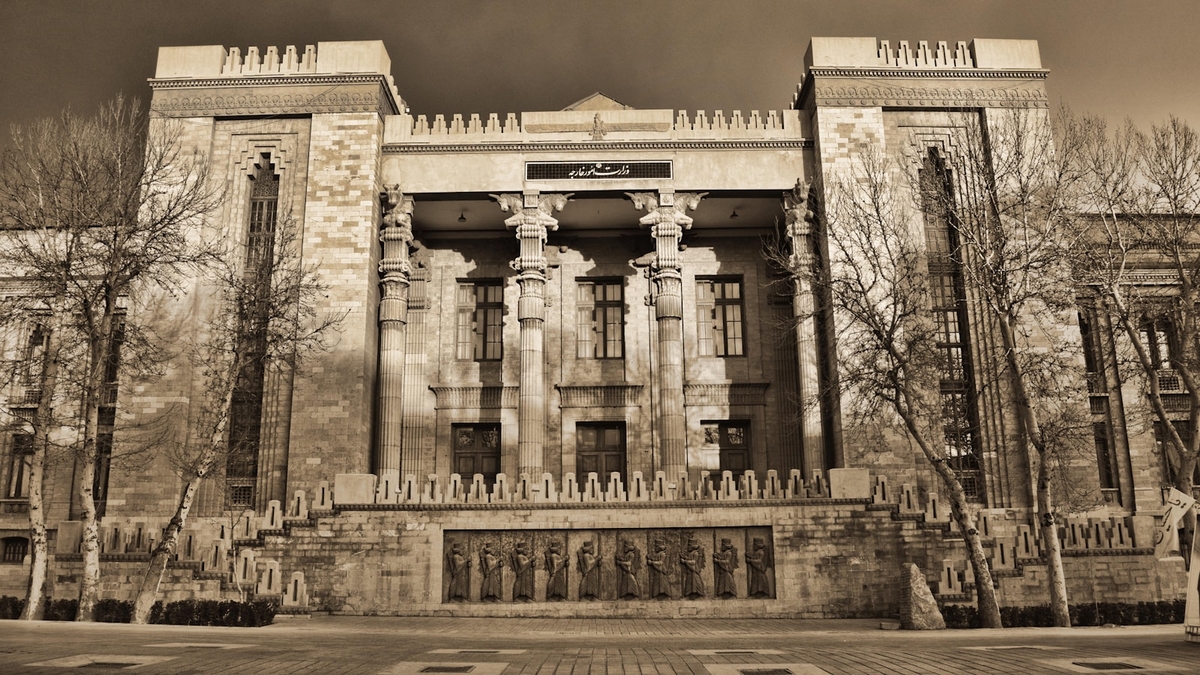
Photo by Vahid Moeini Jazani on Unsplash
Regime transition from Khomeini to Khamenei and reorganization of Iranian power structure
1. Executive Summary
The Iranian regime after Khomeini’s death was not simply “naturally inherited by the next religious leader.” In reality, a combination of constitutional amendments in 1989, selection by the Assembly of Experts, a political coalition centered on Rafsanjani, a security apparatus including the Revolutionary Guards Corps (IRGC), and control by the Guardian Council created a new center of gravity for governance centered on Khamenei. What is important here is that religious orthodoxy was not determined solely by pure theological authority, but was reconstituted through institutional reforms and political coalitions. Source note: For details on the 1989 constitutional amendment and leadership selection, see Encyclopaedia Iranica, Constitution of the Islamic Republic and USIP Iran Primer, The Assembly of Experts. The essence of this transition is threefold. First, Khamenei’s authority was supported not only by his symbolism as the “successor of the founder of the revolution,” but also by the system that unified the military, judiciary, and supervisory institutions through the constitutional authority of the supreme leader. Second, the 1989 reform adjusted the qualification requirements for the supreme leader and the layout of state institutions, redesigning the system in a way that prioritized institutional continuity over individual charisma. Third, each subsequent administration has merely made fluctuations in economic, foreign, and nuclear policy to the extent permitted by the supreme leader, rather than changing policies freely. Source note: The constitutional power of the supreme leader is based on Constitute Project, Constitution of the Islamic Republic of Iran and USIP Iran Primer, The Supreme Leader. In foreign policy, the regime moved toward a combination of deterrence and negotiation through nuclear development, sanctions resistance, and the use of regional proxy forces, while suppressing the direct language of “exporting revolution.” The final strategic decision remains in the hands of the supreme leader and his surrounding organizations, including reconstruction during the Rafsanjani period, limited opening during the Khatami period, confrontation with the United States and nuclear acceleration during the Ahmadinejad period, JCPOA during the Rouhani period, hardening during the Raisi period, and the Pezeshkian administration in 2024. Source note: Relationship with each government is according to USIP Iran Primer, Seven Presidents and Reuters, July 2024 Iran election coverage. The assumption that strategic authority will remain with the supreme leader even after 2024, even if a reformist president is elected, is an estimate based on publicly available information.
       timeline
    title Regime transition after 1989
    1989 : Khamenei selected
    1990s : Reconstruction line
    1997-2005 : Reform line
    2005-2013 : Nuclear hardening
    2013-2021 : JCPOA period
    2021-2024 : Hardliner concentration
    2024 onward : Adjustment line
2. How was the succession established in 1989?
After Khomeini’s death on June 3, 1989, the regime needed to avoid a succession vacuum. The Assembly of Experts selected Khamenei as its leader, and subsequent constitutional amendments created a system to support the supreme leader. What is important here is that the election was not an “automatic succession of already established religious authority,” but was a political decision to maintain the legitimacy of the revolution. Source note: Regarding the succession after Khomeini’s death and the role of the Council of Experts, refer to USIP Iran Primer, The Assembly of Experts and Britannica, Ruhollah Khomeini.
The 1989 revision has great institutional significance. IRANICA shows that shortly before his death, Khomeini called for a constitutional amendment that adjusted the Supreme Leader qualification requirements, removed the marja requirement, and redesigned the constitution to assume a single Supreme Leader. Furthermore, the position of prime minister was abolished and executive power was reorganized to center on the president. As a result, the center of authority shifted from the “council of multiple religious authorities” to the “constitutional apex concentrated in one leader.” Source note: For the position of the 1989 revision, refer to Encyclopaedia Iranica, Constitution of the Islamic Republic and USIP Iran Primer, Seven Presidents.
The text of the Constitution also supports this relocation. Article 5 provides for the governance of jurists, Article 107 provides for the selection of leaders by the Assembly of Experts, and Article 110 provides for the supreme command of the military, the appointment of the chief justice, and the authority to appoint jurists to the Guardian Council. Articles 91, 94, and 99 provide for bill review and election supervision by the Guardian Council, while Articles 143 and 150 provide for the division of roles between the conventional military and the Revolutionary Guards. In other words, the succession in 1989 was not just a personnel matter, but a rewiring of the system. Source note: Refer to Constitute Project, Constitution of the Islamic Republic of Iran for article confirmation.
       flowchart TB
    Khomeini["Khomeini's charismatic revolutionary authority"]
    Assembly["Assembly of Experts"]
    Revision["1989 constitutional revision"]
    Khamenei["Khamenei"]
    Leader["Supreme Leader"]
    Institutions["Authority distribution to governing institutions"]

    Khomeini -->|post-death vacuum| Assembly
    Assembly -->|selection| Khamenei
    Revision -->|redesign qualifications and executive structure| Leader
    Khamenei --> Leader
    Leader --> Institutions
3. What supported Khamenei’s authority base?
Khamenei’s authority base cannot be explained solely by his theological qualifications. According to publicly available documents, there were at least five pillars. First, the selection of leaders by a meeting of experts. Second, a transitional political coalition centered on Rafsanjani. Third, the entrance control of candidates and bills by the Guardian Council. Fourth, the power of appointment to the judiciary and security apparatus. Fifth is the security infrastructure for revolutionary defense centered on the IRGC. Source note: The institutional positions of the Assembly of Experts, the Guardian Council, the Judiciary, and the IRGC are organized into USIP Iran Primer, The Assembly of Experts, The Guardian Council, The Judiciary, and The Islamic Revolutionary Guard Corps. Rafsanjani was a key figure in this transition. USIP describes the period from 1989 to 1997 as the era of “Rafsanjani as the most powerful public official,” and explains that he was responsible for restructuring the system and post-war reconstruction. It is reasonable to read that Khamenei constructed both religious authority and political practice on a coalition of institutions that included Rafsanjani. “Support” here was not simple loyalty, but interdependence for the maintenance of the system. Source note: Referenced USIP Iran Primer, Seven Presidents. Under the constitution, the supreme leader is placed above elected bodies through the supreme command of the military, the appointment of the head of the national broadcaster, the appointment of the head of the judiciary, and the appointment of the jurist of the Guardian Council. Therefore, Khamenei’s authority operates not because he is “religiously great,” but as a bundle of authority that is institutionally wired to other institutions. This is a transformation of the revolutionary leadership of the Khomeini era into a more long-lasting system of governance. Source Note: Supreme Leader Authority referenced Constitute Project, Constitution of the Islamic Republic of Iran and USIP Iran Primer, The Supreme Leader. However, this foundation is not fixed. The Council of Experts is said to be responsible for selecting and supervising the supreme leader, but since candidates are examined by the Guardian Council, those who supervise are also subject to supervision. There is a tension here in which institutions tend to reproduce themselves, but cannot be completely closed off. Calling the Khamenei regime a “gate-controlled quasi-oligarchy” is closer to reality than a “personal dictatorship.” This is an estimate based on publicly available information. Source note: Referenced USIP Iran Primer, The Assembly of Experts and The Guardian Council.
4. How to organize the relationship with each government over time
4.1 Rafsanjani Period: Reconstruction and Practical Nationalization
The Rafsanjani period from 1989 to 1997 was a period in which the wartime regime of the revolutionary period focused on reconstruction and institutional stability. Externally, hard-line talk of exporting the revolution was suppressed, while internally, priority was given to economic recovery, administrative reorganization, and normalization of the system. At this stage, Khamenei strengthened his role as the final umpire for maintaining the regime, rather than advocating the purification of the revolution. Source note: Referenced USIP Iran Primer, Seven Presidents.
4.2 Khatami Period: Reforms expanded, but the ceiling remained
The Khatami period from 1997 to 2005 attracted attention for its reform policy that advocated freedom of speech, the rule of law, and civil society. However, due to the Guardian Council’s review, the judiciary, and the institutional veto power of conservatives, the reform could not go beyond the institutional ceiling. What we saw here was a structure in which even if electoral politics expanded, the final decision-making power remained with the supreme leader. Source note: For the relationship between the Khatami period and the system upper limit, refer to USIP Iran Primer, Seven Presidents and USIP Iran Primer, The Guardian Council.
4.3 Ahmadinejad period: Confrontational stance and strengthening of the security state
The Ahmadinejad period from 2005 to 2013 brought anti-Western sentiments, revolutionary rhetoric, and nuclear hardening to the fore. This is not simply “the president’s personality.” This is because sanctions, domestic control, and the IRGC’s economic and political influence have increased, and external confrontation has become a tool for domestic governance. The Khamenei regime further connected religious authority to the language of the security state during this period. Source note: Referenced USIP Iran Primer, Seven Presidents and USIP Iran Primer, The Islamic Revolutionary Guard Corps.
4.4 Rouhani period: nuclear negotiations and attempts at sanctions relief
The Rouhani period from 2013 to 2021 aimed at managing the nuclear issue and reducing external tensions, and reached the JCPOA in 2015. However, in 2018, when the United States withdrew from the JCPOA and re-strengthened economic sanctions, the diplomatic gains made by reformers and moderates were significantly diminished. Rouhani’s policy was a tactical easing within the limits of the Supreme Leader’s tolerance, and was not a fundamental shift in strategy. Source note: JCPOA and US withdrawal referenced White House, Statement by the President on the JCPOA and USIP Iran Primer, Seven Presidents.
4.5 Raishi period: Refocusing the hardliners
When Raisi became president in 2021, the regime shifted back towards hardliners. He was originally known for his closeness to the Supreme Leader, and a 2021 article also emphasized his loyalty to Khamenei and his upholding of revolutionary values. This further aligned the executive branch with the supreme leader’s political line. Source note: Referenced USIP Iran Primer, Raisi’s Ties to the Supreme Leader.
4.6 After Raisi’s death and the Pezeshkian period: Tone adjustment, strategy unchanged
After Raisi’s death in 2024, Pezeshkian was elected after an interim system. Although this indicated the possibility of softening the tone of foreign relations somewhat, it did not change the strategic authority of the supreme leader. Reuters reported that Pezeshkian won the July 2024 elections, while also suggesting that the president’s powers will remain constrained in Iran’s power structure. The conclusion here is that changes in election results and changes at the core of the system are two different things. Source note: Referenced Reuters, Moderate Pezeshkian wins Iran’s presidential runoff and USIP Iran Primer, The Supreme Leader. The assumption that strategic authority will remain with the supreme leader even if there is a presidential change is an estimate based on publicly available information.
       flowchart LR
    SL["Supreme Leader"]
    EXP["Assembly of Experts"]
    GC["Guardian Council"]
    IRGC["IRGC"]
    PRS["President"]
    ELEC["Elections"]

    EXP -->|selection and oversight| SL
    SL --> GC
    SL --> IRGC
    ELEC --> GC
    PRS -->|administration| SL
    GC --> ELEC
5. How does it lead to nuclear development, sanctions, and regional proxy forces?
The foreign policy of the Khamenei regime can be easily understood by reading it in terms of three layers. First, nuclear development is both a security bargaining card and a survival strategy for the regime. Second, while sanctions are painful, they also provide an excuse to tighten domestic control. Third, regional proxy forces are a device for expanding influence while suppressing the costs of direct war. Source note: Nuclear, sanctions, and regional intervention framework referred to Congressional Research Service, Iran: Background and U.S. Policy and CFR, Iran’s Regional Armed Network. In terms of nuclear policy, while the Rouhani-era JCPOA showed a temporary success in “containment through negotiations,” with the US withdrawal in 2018, the Khamenei regime lost its domestic narrative that “negotiate and get rewarded.” Since then, nuclear issues have combined technical enrichment questions with the reliability of sanctions relief, deterrence, and domestic political legitimacy. In recent years, the IAEA has continued to report concerns regarding Iranian enrichment, inspections, and surveillance. Source note: Referenced IAEA, Iran-related verification and monitoring reports and White House, JCPOA withdrawal statement. Sanctions act as economic pressure and at the same time change the distribution of power within the system. Under sanctions, it becomes difficult for ordinary private companies and reformist governments to produce results, and IRGC-affiliated networks and semi-governmental and private economic entities that have access to funds, logistics, and security become relatively stronger. As a result, sanctions not only weaken regimes but also often fatten the most hardline institutions. This is an estimate based on publicly available materials, but it is consistent with the long-term trend. Source note: Referenced Congressional Research Service, Iran: Background and U.S. Policy and USIP Iran Primer, The Islamic Revolutionary Guard Corps. Regional proxy forces such as Hezbollah, Syrian regime forces, Iraqi pro-Iranian militias, and the Houthis have become targets for Iran’s influence projection. Here again, the focus is not on the “revolutionary idea” itself, but on the national strategy that brings together deterrence, retaliation, negotiation, sanctions avoidance, and domestic legitimacy. Rather than emphasizing revolutionary universalism, it is reasonable to view the Khamenei regime as moving toward creating security depth through regional networks. Source note: Referenced CFR, Iran’s Regional Armed Network and USIP Iran Primer, The Islamic Revolutionary Guard Corps.
6. How should it be read in practice?
When reading this system in practice, it is more effective to look at “which system controls candidates, legislation, the military, the judiciary, broadcasting, public security, and funding,” rather than “who is the president.” The center of power in Iran is divided into the part visible through elections and the part surrounding elections. If we overlook the latter, we will make mistakes in our diplomacy toward Iran, in the design of sanctions, in our nuclear negotiations, and in our predictions of regional conflicts. Source note: Referenced USIP Iran Primer, The Supreme Leader, The Guardian Council, The Assembly of Experts. Khamenei’s regime is not a “fixed dictatorship.” Although the system is stable, actual operation changes due to factional balance, sanctions, war, generational change, and attrition of regional proxy forces. Therefore, in order to predict the future, it is necessary to look not only at religious qualifications, but also at the IRGC’s personnel affairs, the review trends of the Guardian Council, the composition of the Council of Experts, whether nuclear negotiations are possible, and the prospects for sanctions relief. This is an estimate based on publicly available information.
7. Limitations and remaining issues
Because this article focuses on the institutional design and political coalitions that can be seen from publicly available materials, it does not fully address the private factional negotiations, budget allocation, division of labor within the Revolutionary Guards, the state of religious property, or the personal relationships surrounding the supreme leader. Furthermore, it has not yet been determined how far the Pezeshkian administration will expand its policy space in the medium to long term after 2024. All that can be said at this point is that even if the tone of the administration changes, the ultimate institutional authority will remain with the supreme leader. Source note: Final institutional authority is based on USIP Iran Primer, The Supreme Leader and Constitute Project, Constitution of the Islamic Republic of Iran.
8. Reference information
- Encyclopaedia Iranica, Constitution of the Islamic Republic
- Britannica, Ruhollah Khomeini
- USIP Iran Primer, The Assembly of Experts
- USIP Iran Primer, The Supreme Leader
- USIP Iran Primer, The Guardian Council
- USIP Iran Primer, The Judiciary
- USIP Iran Primer, The Islamic Revolutionary Guard Corps
- USIP Iran Primer, Seven Presidents
- USIP Iran Primer, Raisi’s Ties to the Supreme Leader
- Constitute Project, Constitution of the Islamic Republic of Iran
- White House, Statement by the President on the JCPOA
- IAEA, Iran-related verification and monitoring reports
- Congressional Research Service, Iran: Background and U.S. Policy
- CFR, Iran’s Regional Armed Network
ホメイニからハメネイへの体制移行とイラン権力構造の再編
1. エグゼクティブサマリー
ホメイニ死去後のイラン体制は、単に「次の宗教指導者が自然に継いだ」のではない。実際には、1989年の憲法改正、専門家会議による選出、ラフサンジャニを中心とする政治連合、革命防衛隊(IRGC)を含む治安機構、護憲評議会による入口管理が重なって、ハメネイを中心とする新しい統治の重心が作られた。ここで重要なのは、宗教的正統性が純粋な神学的権威だけで決まったのではなく、制度改正と政治連合によって再構成された点である。 出典: 1989年の憲法改正と指導者選出の経緯は Encyclopaedia Iranica, Constitution of the Islamic Republic と USIP Iran Primer, The Assembly of Experts を参照した。
この移行の本質は三つある。第一に、ハメネイの権威は「革命の創始者の後継者」という象徴性だけでなく、憲法上の最高指導者権限を通じて軍事・司法・監督機構を束ねる仕組みに支えられた。第二に、1989年改正は、最高指導者の資格要件と国家機関の配置を調整し、個人のカリスマより制度の継続性を優先する方向で体制を再設計した。第三に、その後の各政権は、自由に政策を変えたというより、最高指導者が許容する範囲で経済・外交・核政策の揺れを作ったにすぎない。 出典: 憲法上の最高指導者権限は Constitute Project, Constitution of the Islamic Republic of Iran と USIP Iran Primer, The Supreme Leader に基づく。
対外政策では、この体制は「革命輸出」の直接的言語を抑えながら、核開発、制裁耐性、地域代理勢力の運用を通じて抑止と交渉を併用する方向へ進んだ。ラフサンジャニ期の再建、ハータミー期の有限な開放、アフマディネジャド期の対米対決と核加速、ロウハニ期のJCPOA、ライシ期の強硬化、そして2024年のペゼシュキアン政権でも、最終的な戦略決定は最高指導者とその周辺機構に残っている。 出典: 各政権との関係は USIP Iran Primer, Seven Presidents と Reuters, July 2024 Iran election coverage による。2024年以降も、改革派大統領の選出はあっても戦略権限は最高指導者側に残るという見立ては公表情報からの推定である。
       timeline
    title 1989年以降の体制移行
    1989 : ハメネイ選出
    1990s : 再建路線
    1997-2005 : 改革路線
    2005-2013 : 核強硬化
    2013-2021 : JCPOA期
    2021-2024 : 強硬派集中
    2024以降 : 調整路線
2. 1989年の継承はどう成立したか
1989年6月3日にホメイニが死去すると、体制は継承の空白を避ける必要に迫られた。専門家会議はハメネイを指導者に選び、その後の憲法改正で、最高指導者を支える制度配置が整えられた。ここで重要なのは、選出が「既に完成した宗教的権威の自動継承」ではなく、革命の正統性を維持するための政治的決定だったことだ。 出典: ホメイニ死去後の継承と専門家会議の役割は USIP Iran Primer, The Assembly of Experts と Britannica, Ruhollah Khomeini を参照した。
1989年改正の制度的意味は大きい。IRANICA は、ホメイニが死の直前に憲法改正を求めたこと、改正で最高指導者資格要件が調整され、marja 要件が外れ、単独の最高指導者を前提とする方向に再設計されたことを示している。さらに、首相職は廃止され、行政権は大統領中心へ再編された。これによって、権威の中心は「複数の宗教権威の合議」から「ひとりの指導者に集中した憲法上の頂点」へ移った。 出典: 1989年改正の位置づけは Encyclopaedia Iranica, Constitution of the Islamic Republic と USIP Iran Primer, Seven Presidents を参照した。
憲法本文もこの再配置を裏づける。第5条は法学者統治を、第107条は専門家会議による指導者選出を、第110条は軍の最高指揮、司法長任命、護憲評議会法学者任命などの権限を定める。第91条・第94条・第99条は護憲評議会による法案審査と選挙監督を、第143条・第150条は通常軍と革命防衛隊の役割分担を示す。つまり、1989年の継承は、単なる人事ではなく、制度の配線変更だった。 出典: 条文確認は Constitute Project, Constitution of the Islamic Republic of Iran を参照した。
       flowchart TB
    Khomeini["ホメイニのカリスマ的革命権威"]
    Assembly["専門家会議"]
    Revision["1989年憲法改正"]
    Khamenei["ハメネイ"]
    Leader["最高指導者"]
    Institutions["統治機関への権限配分"]

    Khomeini -->|死去後の空白| Assembly
    Assembly -->|選出| Khamenei
    Revision -->|資格要件・行政配置を再設計| Leader
    Khamenei --> Leader
    Leader --> Institutions
3. ハメネイの権威基盤は何に支えられたか
ハメネイの権威基盤は、神学的資格だけでは説明できない。公開資料から見ると、少なくとも五つの支柱があった。第一に、専門家会議による指導者選出。第二に、ラフサンジャニを軸とする移行期の政治連合。第三に、護憲評議会による候補者・法案の入口管理。第四に、司法と治安機構への任命権。第五に、IRGC を中核にした革命防衛の安全保障基盤である。 出典: 専門家会議、護憲評議会、司法、IRGC の制度的位置づけは USIP Iran Primer, The Assembly of Experts、The Guardian Council、The Judiciary、The Islamic Revolutionary Guard Corps に整理されている。
ラフサンジャニは、この移行のキーパーソンだった。USIP は、1989年から1997年を「最も強力な公職者としてのラフサンジャニ」の時代として描き、彼が体制再建と戦後復興の実務を担ったと説明する。ハメネイは、宗教的権威と政治的実務の両方を、ラフサンジャニを含む制度連合の上で組み立てた、と読むのが妥当である。ここでの「支持」は、単純な忠誠ではなく、体制維持のための相互依存であった。 出典: USIP Iran Primer, Seven Presidents を参照した。
憲法上、最高指導者は軍の最高指揮、国家放送の長の任命、司法長の任命、護憲評議会法学者の任命などを通じて、選挙で選ばれる機関より上位に置かれる。したがって、ハメネイの権威は「宗教的に偉いから」ではなく、制度的に他機関へ配線された権限の束として作動する。これはホメイニ期の革命指導を、より長期持続する統治装置へ変換したものだ。 出典: 最高指導者権限は Constitute Project, Constitution of the Islamic Republic of Iran と USIP Iran Primer, The Supreme Leader を参照した。
一方で、この基盤は固定ではない。専門家会議は最高指導者を選出・監督するとされるが、その候補者は護憲評議会の審査を受けるため、監督する側も監督される。ここに、制度が自己再生産しやすいが、完全には閉じきらない緊張がある。ハメネイ体制は「個人独裁」よりも、「入口管理された準寡頭制」と呼ぶ方が実態に近い。これは公表情報からの推定である。 出典: USIP Iran Primer, The Assembly of Experts と The Guardian Council を参照した。
4. 各政権との関係をどう時系列化するか
4.1 ラフサンジャニ期: 再建と実務国家化
1989年から1997年のラフサンジャニ期は、革命期の戦時体制を、再建と制度安定に寄せた時期だった。対外的には、革命輸出の強硬語りは抑えられ、対内的には経済復興、行政再編、体制の正常化が優先された。ハメネイはこの局面で、革命の純化を掲げるというより、体制維持の最終審級として立つ役割を強めた。 出典: USIP Iran Primer, Seven Presidents を参照した。
4.2 ハータミー期: 改革は拡大したが、上限は残った
1997年から2005年のハータミー期は、言論の自由、法の支配、市民社会を掲げる改革路線が注目された。しかし、護憲評議会の審査、司法、保守派の制度的拒否権により、改革は制度上の上限を超えられなかった。ここで見えたのは、選挙政治が拡張しても、最終決定権は最高指導者側に残るという構造だった。 出典: ハータミー期と制度上限の関係は USIP Iran Primer, Seven Presidents と USIP Iran Primer, The Guardian Council を参照した。
4.3 アフマディネジャド期: 対決姿勢と安全保障国家の強化
2005年から2013年のアフマディネジャド期には、反西側、革命的レトリック、核強硬化が前面に出た。これは単純な「大統領の個性」ではない。制裁、国内統制、IRGC の経済・政治的影響力が増し、対外対決が国内統治の道具にもなったからである。ハメネイ体制はこの時期、宗教的権威を安全保障国家の言語へさらに接続した。 出典: USIP Iran Primer, Seven Presidents と USIP Iran Primer, The Islamic Revolutionary Guard Corps を参照した。
4.4 ロウハニ期: 核交渉と制裁緩和の試み
2013年から2021年のロウハニ期は、核問題の管理と対外緊張の低減を掲げ、2015年のJCPOA に到達した。だが、2018年に米国が JCPOA から離脱し、経済制裁を再強化すると、改革派・穏健派が示した外交的成果は大きく削られた。ロウハニ路線は、最高指導者の許容範囲内での戦術的緩和であり、戦略の根本転換ではなかった。 出典: JCPOA と米国離脱は White House, Statement by the President on the JCPOA と USIP Iran Primer, Seven Presidents を参照した。
4.5 ライシ期: 強硬派の再集中
2021年にライシが大統領になると、体制は再び強硬派に寄った。彼はもともと最高指導者への近さで知られ、2021年の記事でも、ハメネイに対する忠誠と、革命的価値観の維持が強調されていた。これにより、行政部門は最高指導者の政治線にさらに整列した。 出典: USIP Iran Primer, Raisi’s Ties to the Supreme Leader を参照した。
4.6 ライシ死去後とペゼシュキアン期: トーン調整、戦略は不変
2024年のライシ死去後、暫定体制を経てペゼシュキアンが当選した。これは対外関係のトーンを多少和らげる可能性を示したが、最高指導者の戦略権限が変わったわけではない。Reuters は、2024年7月の選挙でペゼシュキアンが勝利したことを報じ、同時にイランの権力構造では大統領の権限がなお制約されることを示唆している。ここでの結論は、選挙結果の変化と体制の中枢変化は別物だということだ。 出典: Reuters, Moderate Pezeshkian wins Iran’s presidential runoff と USIP Iran Primer, The Supreme Leader を参照した。大統領交代があっても戦略権限は最高指導者側に残るという見立ては公表情報からの推定である。
       flowchart LR
    SL["最高指導者"]
    EXP["専門家会議"]
    GC["護憲評議会"]
    IRGC["IRGC"]
    PRS["大統領"]
    ELEC["選挙"]

    EXP -->|選出・監督| SL
    SL --> GC
    SL --> IRGC
    ELEC --> GC
    PRS -->|行政| SL
    GC --> ELEC
5. 核開発・制裁・地域代理勢力へどうつながるか
ハメネイ体制の対外政策は、三つのレイヤーで読むと分かりやすい。第一に、核開発は安全保障上の交渉カードであり、体制の生存戦略でもある。第二に、制裁は痛手だが、同時に国内の統制を強める口実にもなる。第三に、地域代理勢力は、直接戦争のコストを抑えつつ影響力を拡大する装置である。 出典: 核・制裁・地域介入の枠組みは Congressional Research Service, Iran: Background and U.S. Policy と CFR, Iran’s Regional Armed Network を参照した。
核政策では、ロウハニ期の JCPOA が「交渉による封じ込め」の一時的成功を示した一方、2018年の米国離脱で、ハメネイ体制は「交渉すれば報われる」という国内物語を失った。これ以降、核は単なる技術問題ではなく、制裁解除の信頼性、抑止、国内政治の正統性を同時に扱う問題になった。IAEA は近年も、イランの濃縮・査察・監視をめぐる懸念を継続的に報告している。 出典: IAEA, Iran-related verification and monitoring reports と White House, JCPOA withdrawal statement を参照した。
制裁は、経済的圧力であると同時に、体制内部の権力分配を変える。制裁下では、通常の民間企業や改革派行政は成果を出しにくくなり、資金・物流・安全保障にアクセスできる IRGC 系のネットワークや半官半民の経済主体が相対的に強くなる。結果として、制裁は体制を弱めるだけでなく、しばしば最も強硬な機構を太らせる。これは公開資料からの推定だが、長期傾向としては整合的である。 出典: Congressional Research Service, Iran: Background and U.S. Policy と USIP Iran Primer, The Islamic Revolutionary Guard Corps を参照した。
地域代理勢力では、ヒズボラ、シリア政権側勢力、イラクの親イラン民兵、フーシ派などが、イランの影響力投射の受け皿になってきた。ここでも中心は「革命の理念」そのものではなく、抑止、報復、交渉、制裁回避、国内正統性を束ねる国家戦略である。ハメネイ体制は、革命の普遍主義を前面に出すより、地域ネットワークを通じて安全保障上の深さを作る方向へ移ったと見るのが妥当である。 出典: CFR, Iran’s Regional Armed Network と USIP Iran Primer, The Islamic Revolutionary Guard Corps を参照した。
6. 体制変化をどう読むべきか
この体制を実務で読むときは、「大統領が誰か」より「どの制度が候補者、法案、軍、司法、放送、治安、資金を握るか」を見る方が有効である。イランの権力中心は、選挙で見える部分と、選挙を包む部分に分かれている。後者を見落とすと、対イラン外交、制裁設計、核交渉、地域紛争の予測を誤る。 出典: USIP Iran Primer, The Supreme Leader、The Guardian Council、The Assembly of Experts を参照した。
重要なのは、ハメネイ体制が「固定された独裁」ではないことだ。制度は安定しているが、派閥均衡、制裁、戦争、世代交代、地域代理勢力の損耗で実際の運用は変わる。したがって、将来を読むには、宗教的資格だけでなく、IRGC の人事、護憲評議会の審査傾向、専門家会議の構成、核交渉の可否、制裁緩和の見込みをセットで追う必要がある。ここは公表情報からの推定である。
7. 限界と残る論点
本稿は、公開資料から見える制度設計と政治連合を中心に整理したため、非公開の派閥交渉、予算配分、革命防衛隊内部の分業、宗教財産の実態、最高指導者周辺の個人関係までは十分に扱っていない。また、2024年以降のペゼシュキアン政権が中長期的にどこまで政策余地を広げるかは、まだ確定していない。現時点でいえるのは、行政のトーンは変えられても、制度上の最終権限は最高指導者に残るということまでである。 出典: 制度上の最終権限は USIP Iran Primer, The Supreme Leader と Constitute Project, Constitution of the Islamic Republic of Iran に基づく。
8. 参考情報
- Encyclopaedia Iranica, Constitution of the Islamic Republic
- Britannica, Ruhollah Khomeini
- USIP Iran Primer, The Assembly of Experts
- USIP Iran Primer, The Supreme Leader
- USIP Iran Primer, The Guardian Council
- USIP Iran Primer, The Judiciary
- USIP Iran Primer, The Islamic Revolutionary Guard Corps
- USIP Iran Primer, Seven Presidents
- USIP Iran Primer, Raisi’s Ties to the Supreme Leader
- Constitute Project, Constitution of the Islamic Republic of Iran
- White House, Statement by the President on the JCPOA
- IAEA, Iran-related verification and monitoring reports
- Congressional Research Service, Iran: Background and U.S. Policy
- CFR, Iran’s Regional Armed Network